Campaign roundup
The best LGBTQ+ holiday campaigns of all time
By The Gaygency · 11-26-26 · 7 min read
The best LGBTQ+ holiday campaigns of all time
This list runs in chronological order, not ranked, because the more useful story here is the progression: what a brand or network was willing to do in 2015 looks different from what one was willing to do in 2025, and seeing them in sequence shows the actual shape of that change. Every entry below is real, dated, and sourced. A few are traditional advertising; a few are content releases with a coordinated marketing and press push behind them, which counts as holiday marketing in the same way a product launch does.
Tiffany & Co., "Will You" (January 2015)
Tiffany & Co. became the first major jewelry brand to feature a real-life same-sex couple in an engagement campaign, shot in black and white by fashion photographer Peter Lindbergh alongside six other real couples at different relationship stages. The campaign mattered less because of when it launched and more because of when engagements happen: December is consistently the most popular month to get engaged, with Christmas Day ranking as the single most common day and roughly one in five proposals happening during the month, according to jewelry industry survey data. Tiffany's campaign sits inside that engagement season, the stretch from Thanksgiving through Valentine's Day when the jewelry industry runs its biggest push of the year, and normalized what that campaign could look like.
Why it holds up: the couple was real, not a casting choice for a single ad, and the campaign ran across the brand's full marketing calendar rather than appearing once and disappearing.
A fact-check note on a well-known 2015 ad
A widely repeated claim online credits a major European supermarket's viral 2015 Christmas ad with a coming-out storyline. That claim does not hold up against the ad's actual plot, which centers on a grandfather reuniting his family for the holidays with no LGBTQ+ storyline present. It is left off this list for that reason. A campaign roundup is only useful if every entry survives a direct fact check, including the ones that would have been convenient to include.
Five years separate the 2015 entries from the next one on this list, and then five queer-inclusive holiday titles arrived in a single 2020 season.
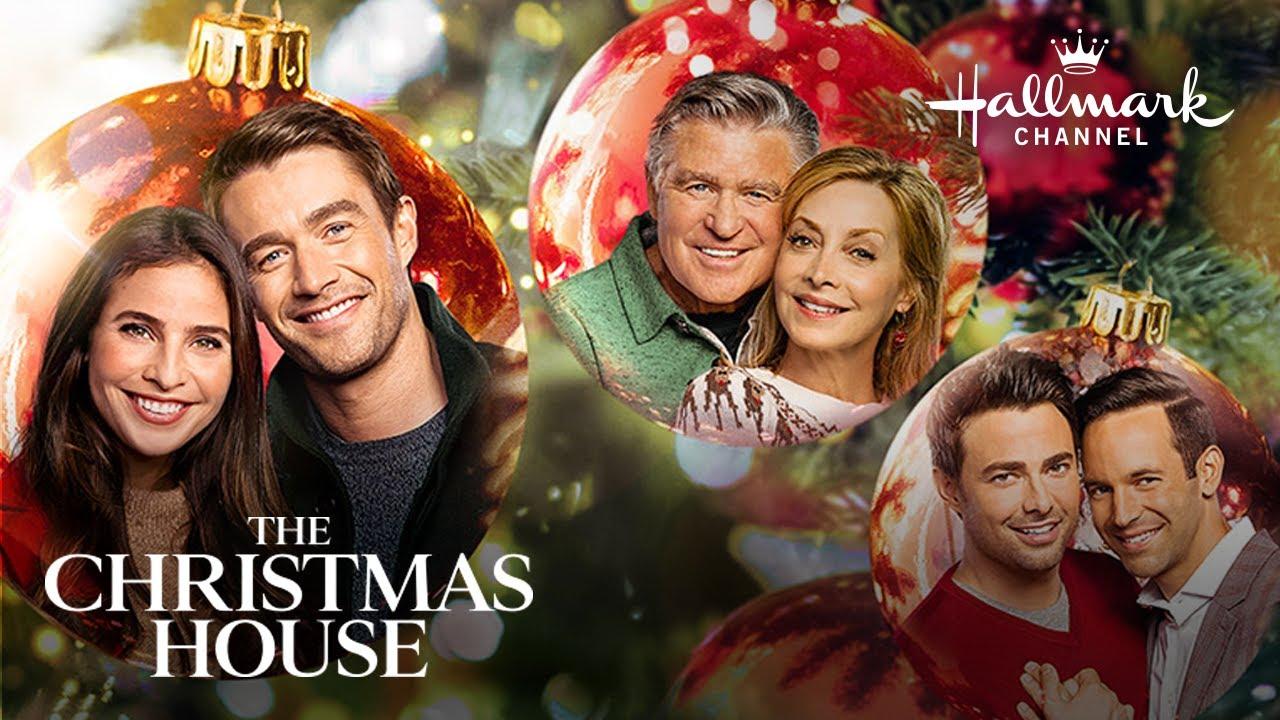
Hallmark Channel, "The Christmas House" (November 22, 2020)
"The Christmas House" was the first Hallmark Channel movie to prominently feature a same-sex couple, Brandon and Jake, a married pair working through the process of adopting their first child, woven into a larger family ensemble story. Hallmark's own programming executive told the Los Angeles Times the film was written "to reflect the reality of countless families all over the world."
Why it holds up: it arrived as part of the network's main holiday lineup, not a side release, and Hallmark followed it with a sequel and further LGBTQ+-inclusive titles in the years after, which is the continuity that separates a real shift from a one-off.
Lifetime, "The Christmas Setup" (December 12, 2020)
Lifetime's first LGBTQ-themed Christmas film starred real-life married couple Ben Lewis and Blake Lee as the romantic leads, with Fran Drescher playing the mother of Lewis's character. The Los Angeles Times counted it as one of five queer-inclusive holiday titles that released across different networks and streamers that same season, alongside "The Christmas House," Netflix's "A New York Christmas Wedding," Hulu's "Happiest Season," and Paramount Network's "Dashing in December," a cluster trade press covered as a turning point for the genre.
Why it holds up: the leads were the center of the story, not a supporting subplot, and the casting of a real couple in the roles added a layer of authenticity trade coverage noted directly.
Hulu, "Happiest Season" (November 25, 2020)
Hulu's "Happiest Season," starring Kristen Stewart and Mackenzie Davis, is the highest-profile entry on this list: a studio-backed theatrical release redirected to streaming, with a marketing campaign built around a major cast and a wide trailer push. The plot follows a woman planning to propose to her girlfriend during a family Christmas gathering, only to learn her girlfriend has not come out to her family yet.
Why it holds up: it was marketed as a mainstream holiday romantic comedy first, with its LGBTQ+ storyline as the plot rather than a marketing angle bolted onto a straight story, which is a meaningfully different creative choice than most of the entries on this list.
The 2020 wave mattered because the following years kept it going, with Lifetime and Hallmark folding queer leads into their standard annual slates instead of treating the first season as the finish line.
Lifetime, "Under the Christmas Tree" (December 19, 2021)
Lifetime's first Christmas movie centered on a lesbian couple, starring Tattiawna Jones and Elise Bauman, premiered as part of the network's "It's a Wonderful Lifetime" holiday slate. Coverage at the time noted it as a deliberate follow-up to the network's earlier gay-lead Christmas film, extending the same commitment to a different couple.
Why it holds up: Lifetime treated it as a continuation of a programming commitment rather than a single experiment, releasing it as a standard part of the same annual slate as its other titles.
Hallmark Channel, "The Holiday Sitter" (December 11, 2022)
Two years after "The Christmas House" gave a same-sex couple a supporting storyline, Hallmark Channel's "The Holiday Sitter" made a gay couple the lead romance for the first time, starring Jonathan Bennett and George Krissa. Bennett, who also co-wrote the film, described it as his version of a network holiday classic built around a gay couple instead of a straight one.
Why it holds up: the two-year gap between "The Christmas House" and "The Holiday Sitter" is itself the story, a network moving from a supporting storyline to a lead one, in public, over a documented timeline.
Hallmark Channel, "The Christmas Baby" (December 21, 2025)
The most recent entry on this list stars Ali Liebert and Katherine Barrell as a married lesbian couple who unexpectedly find themselves caring for an infant left in one of their stores during the holidays. Press coverage described it as one of the network's strongest LGBTQ+ storylines to date, built around parenthood rather than a coming-out or first-relationship arc, a sign the genre has room for stories beyond a couple's origin.
Why it holds up: it is a 2025 release, proof that the pattern established in 2020 has continued for five consecutive holiday seasons rather than fading after the initial wave of coverage.
What separates these from a one-off gesture
- A named couple or storyline specific to the campaign, not a rainbow color palette applied to an existing product
- A history that continues past the first year, whether that is a network's programming slate or a brand's ongoing campaign
- Casting or storytelling built around the people in the story, not a celebrity appearance standing in for the substance
- A release that holds up to a fact check, which is why one widely repeated example above did not make the final list
What ten years of this list shows
Read in sequence, the shift is specific rather than vague. In 2015, a same-sex couple appearing in a mainstream engagement campaign was itself the news. By 2020, three networks and one streamer released queer-inclusive holiday titles in the same season. By 2022, a network that started with a supporting storyline had moved that same couple type into the lead role. By 2025, the story had moved past a couple's relationship entirely into parenthood, a sign the genre stopped needing an LGBTQ+ storyline to explain itself and started treating it as one holiday story among many.
That progression is also the practical lesson for any brand building a holiday campaign next year. The earliest, most talked-about entries on this list were notable because they were first. The ones that held up over time did so because whoever made them kept going after the initial coverage faded.
Frequently asked questions
Is this list ranked from best to worst?
No. It runs chronologically, from 2015 to 2025, because the sequence itself shows how the genre changed over ten years, which is more useful than a subjective ranking would be.
Why include TV movies and streaming releases in a list of marketing campaigns?
Each of these released with a coordinated marketing and press push, including trailers, cast interviews, and network positioning statements, which functions as a campaign in the same way a product launch does. Several entries were explicitly covered by trade press as marketing and programming decisions, not only as entertainment.
Has any brand faced backlash for LGBTQ+-inclusive holiday marketing?
Individual titles on this list generated some public debate, but none were withdrawn or reversed by the network or brand behind them. The continuity from year to year across Hallmark and Lifetime specifically suggests the backlash that did occur was not severe enough to change the underlying programming strategy.
Why was a well-known 2015 supermarket ad left off this list?
That ad is often described online as featuring a coming-out storyline, but its actual plot does not include one. It is excluded because every entry on this list needs to survive a direct fact check against its actual content rather than its reputation.
Is holiday-season LGBTQ+ marketing riskier than Pride marketing?
The entries on this list suggest the opposite pattern from what many brands assume: holiday titles built around a couple's ordinary life, such as parenthood or a family gathering, generated less controversy over time than the earliest, most explicitly "first-ever" campaigns did. Familiarity, built over several years, appears to lower the temperature rather than raise it.
Building a campaign with this kind of staying power starts with the creative system behind it, which is where our visual identity and content engine work comes in. Retail and product brands planning a holiday push specifically can see how we think about that seasonal window on our fashion and e-commerce page.
If you are planning next year's holiday campaign now, book a call.
Free checklist
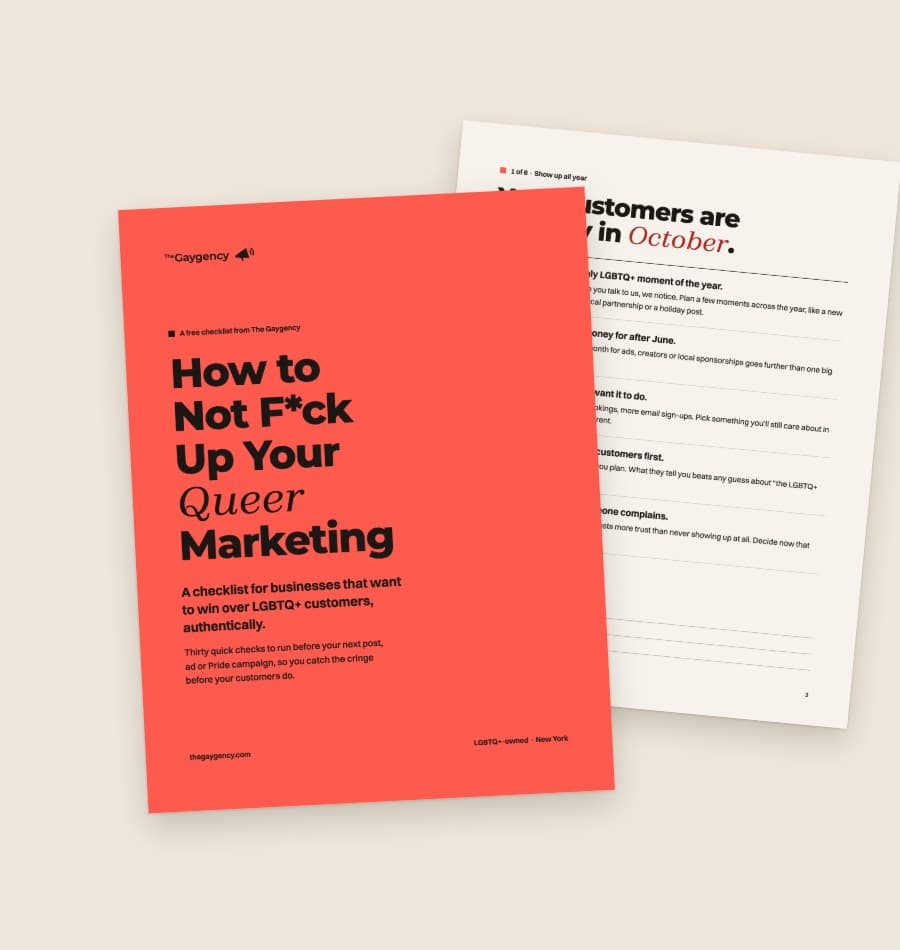
How to not f*ck up your queer marketing
A checklist for businesses that want to win over LGBTQ+ customers, authentically.
Thirty quick checks to run before your next post, ad or Pride campaign, so you catch the cringe before your customers do.
Delivered by email. No spam, ever.
Written by
The marketing and advertising agency for LGBTQ+ businesses and the brands that back them. Strategy, media buying, and brand systems with published results.
See the work