PR playbook
How to pitch LGBTQ+ press
By The Gaygency · 11-09-26 · 7 min read

LGBTQ+ newsrooms are smaller than they were two years ago. Equalpride, the publisher of The Advocate and Out, cut staff across its titles in early 2026 before acquiring and then further trimming Condé Nast's Them, according to The Hollywood Reporter. Q.Digital's CEO has described a similar tightening around Pride-season advertising. Smaller staffs do not mean these outlets stopped needing stories. It means the pitches that get through are the ones that respect how little time an editor has to figure out whether an email matters.
The mechanics are what matter: how embargoes and exclusives work, what the data says gets a response, what LGBTQ+ outlets themselves publish about what they want, and how to build a pitch that survives an inbox instead of getting deleted with the subject line unread.
Equalpride cut staff across The Advocate and Out before acquiring Them, so the editors who remain are covering more beats with less time per pitch.
What the data says about getting a response
Muck Rack's 2026 State of Journalism report, based on responses from nearly 900 journalists, is the most current large-scale look at how reporters treat incoming pitches. The findings cut both ways:
- 86% of journalists say at least some of their published stories originated from a PR pitch.
- 88% delete pitches that do not match their beat.
- 78% say a pitch is genuinely relevant when it affects their audience or community directly, not simply when it falls under their general coverage area.
- 54% say they seldom or never respond to pitches at all.
Read together, those numbers describe a narrow door, not a closed one. Most published stories start somewhere as a pitch, but most pitches never get a reply, and the ones that get deleted fastest are the ones that misjudge the beat. For LGBTQ+ press specifically, that means a general product announcement is a weak pitch to LGBTQ Nation or The Advocate unless it is framed around what it means for LGBTQ+ readers directly, not simply cc'd to every outlet on a list because the brand happens to be LGBTQ+-owned or Pride-adjacent.
"Journalism is under real pressure right now, but what stands out in this year's data is how resilient the profession continues to be."
Gregory Galant, Muck Rack cofounder and CEO, on the 2026 State of Journalism report
Embargoes and exclusives, and when to use each
Two terms get used loosely in PR and mean specific things to journalists.
An embargo means sharing information with a reporter ahead of a public release date, with the reporter's agreement not to publish before that date. It works when a brand needs multiple outlets to run a story at the same time, such as a product launch or a research finding, and needs reporters to have enough lead time to write a considered piece rather than a rushed one. Embargo pitches should state clearly, in the subject line and the first line of the email, that the information is under embargo and name the exact date and time it lifts.
An exclusive means offering the story to a single reporter or outlet only, with no embargo involved elsewhere. Muck Rack's 2023 State of Journalism report found that 76% of journalists are more likely to cover a story when offered an exclusive, which is a meaningful incentive for a brand with one strong story and a specific outlet it wants covering it. The tradeoff is reach: an exclusive to one outlet means no other outlet gets to run the same story around the same date.
For most LGBTQ+ press outreach, an exclusive to the single best-fit outlet, chosen because its readers and its editor's past coverage genuinely overlap with the story, outperforms a broad embargoed release sent to every outlet in this list at once. A wide embargo works when the news itself is large enough that every outlet would plausibly cover it regardless of exclusivity.
"One of the most exciting aspects of working in public relations is developing a media relations strategy for client or company milestones, especially the more significant announcements."
Sophia Atwell, FischTank PR, on embargo pitching strategy
The exclusive-versus-embargo call has to be made before the email is drafted, because promising both to different outlets damages the relationships this channel runs on.
What LGBTQ+ outlets say they want
Several outlets publish their own pitch guidance directly, which removes the guesswork. Pride Source Media, the Michigan-based publisher behind Between The Lines newspaper and the Q Syndicate wire service that distributes stories to regional LGBTQ+ papers nationally, states its criteria plainly on its own site: it wants stories of survival and perseverance that reflect the community's intersectionality, and it explicitly asks pitchers to be specific rather than vague. Its own example of a weak pitch is "this happened and I want to write about it." A strong pitch names the specific angle, the specific person, and why that story matters to their readers right now, not in general.
That specificity requirement shows up across outlets, even ones without published pitch pages. A pitch that says "we support the LGBTQ+ community and want to share our story" gives an editor nothing to write. A pitch that says "our nonprofit's usage data shows a 40% increase in requests from trans youth since a specific policy change, and here is a person willing to talk about it" gives an editor an actual article.
Before you hit send
- Named angle, not a category: state the specific story, not the general topic
- One outlet or the whole list: decide exclusive versus embargo before writing the email, not after
- Subject line states the news, not the brand name
- A real person willing to be quoted or interviewed, already confirmed and ready
- No attachments in the first email. Link to a hosted press kit instead
The mechanics that matter
Research the reporter, not the outlet. A general inbox address gets read last, if at all. Most LGBTQ+ outlets, including the regional papers, list individual reporters and their beats. Pitching the person who has written about your specific topic before takes minutes and dramatically improves the odds of a reply, since that reporter has already shown an editor there is reader interest in the subject.
Keep the first email short. A pitch that requires scrolling is a pitch competing with a delete key. State the news in the first sentence, the reason it matters to that outlet's readers in the second, and offer more detail, data, or interview access in the third. Everything else belongs in a linked press kit, not the email body.
Time it around news, not your calendar. A launch timed to a company's internal schedule is a weaker pitch than the same launch timed to a relevant cultural moment, a piece of legislation, or a data point already in the news. Editors are more likely to cover a story that plugs into a conversation their readers are already having.
Follow up once. A single, brief follow-up after a reasonable window, referencing the original pitch rather than repeating it in full, is standard practice. Repeated follow-ups read as pressure, not persistence, and are more likely to get a reporter to filter future emails from that address.
Send visuals with the pitch, not after interest is confirmed. Culture and lifestyle desks in particular move faster on stories that already have usable photography or video attached, since that removes a production step for them.
Frequently asked questions
What is the difference between an embargo and an exclusive?
An embargo shares news with multiple reporters in advance, on the condition none of them publish before an agreed date. An exclusive offers the story to a single reporter or outlet only, with no other outlet receiving it at the same time.
Should I only pitch LGBTQ+ press during Pride Month?
No. Pride Month is the most competitive month for any LGBTQ+ outlet's attention, since every brand with a Pride campaign is pitching at once. A well-timed pitch tied to real news at another point in the year usually faces far less competition for the same editor's attention.
How do I find the right reporter to pitch instead of a general inbox?
Read the outlet's recent coverage of your topic area and pitch the byline that has written about it before. Most LGBTQ+ outlets, from national digital brands to regional papers, list reporter bylines and beats publicly.
What if I never hear back after pitching?
Muck Rack's 2026 data found 54% of journalists say they seldom or never respond to pitches at all, even ones they read. Silence is common and is not always a rejection. A single follow-up is appropriate; repeated follow-ups without a new angle are not.
Does a small brand with no press history have a real shot at coverage?
Yes, if the story itself is specific and genuinely relevant to that outlet's readers. Editors are not filtering for brand size. They are filtering for whether the pitch tells them something their readers will care about, stated clearly enough that they do not have to do the work of finding the story themselves.
Building pitches that land is public relations work, and the sharper the underlying story, the better the outcome, which is why we usually pair press strategy with a messaging framework built before the first pitch goes out. Founders and small teams without an in-house comms person can see how we approach earned media on our for startups page.
If your next announcement needs a real pitch strategy behind it, book a call.
Free checklist
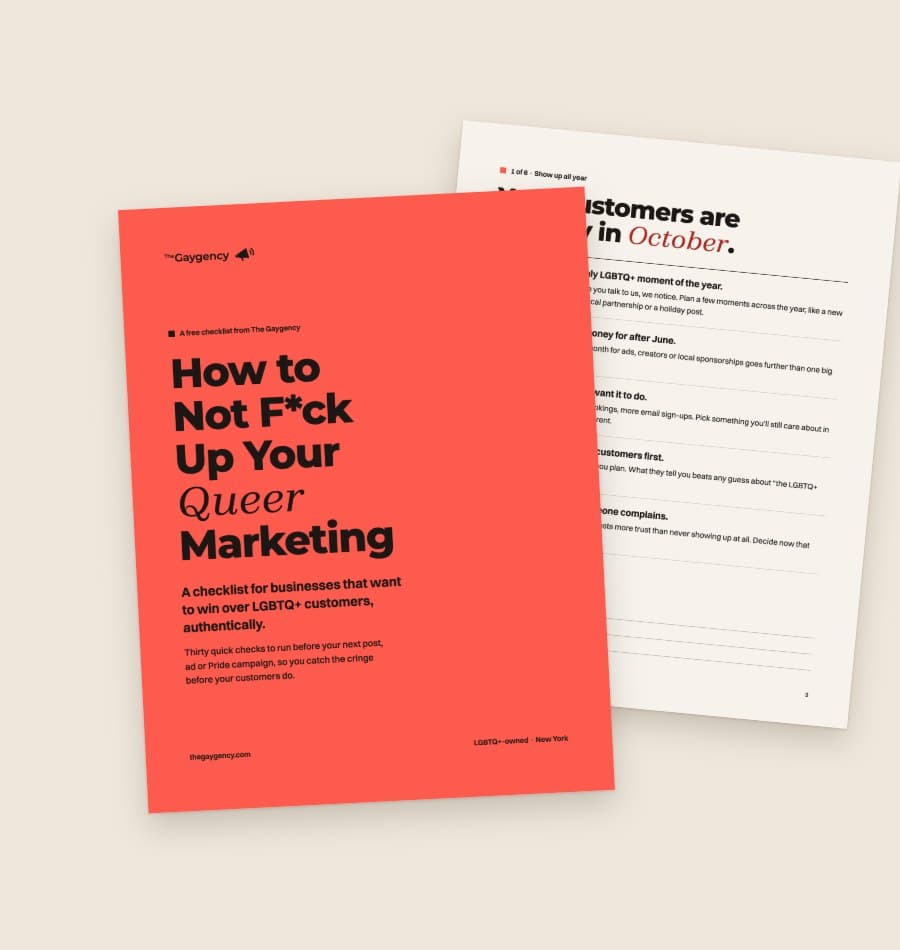
How to not f*ck up your queer marketing
A checklist for businesses that want to win over LGBTQ+ customers, authentically.
Thirty quick checks to run before your next post, ad or Pride campaign, so you catch the cringe before your customers do.
Delivered by email. No spam, ever.
Written by
The marketing and advertising agency for LGBTQ+ businesses and the brands that back them. Strategy, media buying, and brand systems with published results.
See the work