Consumer data
Black Friday and LGBTQ+ shoppers: the loyalty data
By The Gaygency · 11-02-26 · 7 min read
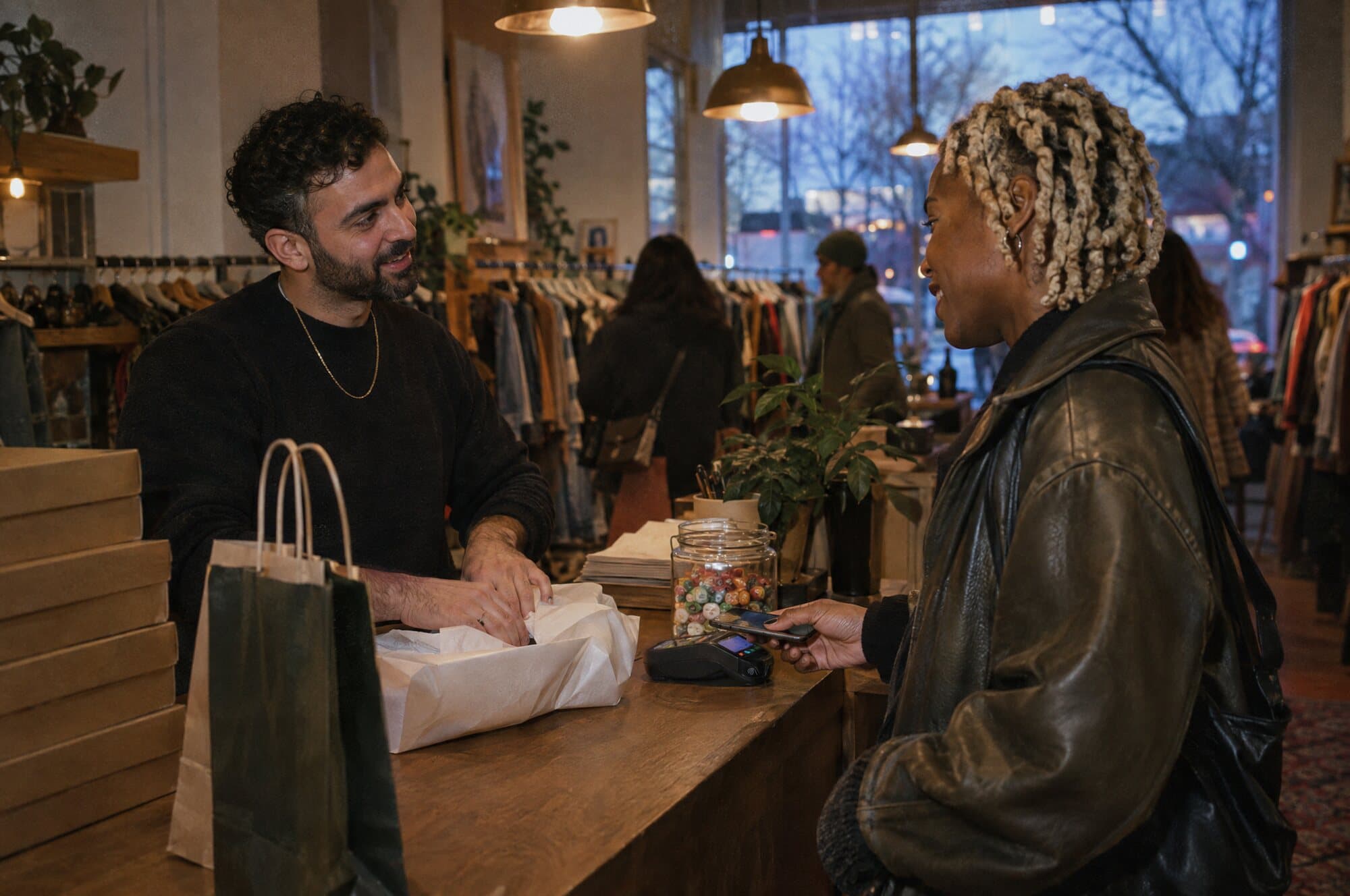
Black Friday 2026 falls on November 27. Last year's Thanksgiving-to-Cyber-Monday stretch drew a record 202.9 million shoppers, according to the National Retail Federation and Prosper Insights & Analytics, the largest turnout since NRF began tracking the five-day period in 2017. Whatever your Black Friday plan looks like this year, it is landing in front of the biggest shopping audience on record.
It is also landing in the middle of a specific, measured shift in where LGBTQ+ consumers are choosing to spend. The Human Rights Campaign Foundation released its Pride in the Marketplace 2026 report this year in partnership with Community Insights, and the findings are direct: loyalty is moving, and it is moving based on which brands consumers believe have stayed present versus pulled back.
The loyalty shift and the record shopping turnout land in the same week, which makes Black Friday 2026 the first high-volume test of where that spending intent goes.
What the 2026 data found
The HRC Foundation's Pride in the Marketplace 2026 report, conducted with Community Insights, surveyed LGBTQ+ consumers on how corporate decisions around diversity and inclusion have changed their spending. The topline numbers:
- 71.5% of LGBTQ+ consumers report buying fewer products from companies they perceive as reducing inclusion commitments.
- 69.5% say they have increased spending with companies they see as staying supportive.
- Companies viewed as retreating from inclusion are losing LGBTQ+ customers at roughly twice the rate of the customer loss non-retreating companies see, per the HRC Foundation's own framing of the data.
- 79.3% of LGBTQ+ adults hold a favorable view of diversity, equity, and inclusion efforts generally.
CNBC's coverage of the report named names on both sides. Target, Walmart, and Amazon were the companies most frequently cited by respondents who said they had reduced spending, while Costco, Apple, and Kroger were most frequently cited among those who said they had increased spending. Ben & Jerry's and Delta were also named among brands gaining support. These are respondent-cited perceptions, not audited revenue figures, but the pattern is consistent enough across multiple outlets covering the same report that it is worth planning around.
"This report isn't a warning for corporations. It's an opportunity and a reminder that LGBTQ+ consumers and our allies are ready to spend with you, work for you, and grow with you for decades to come."
HRC President Kelley Robinson, in the HRC Foundation's Pride in the Marketplace 2026 press release
Where this data comes from, and why it still holds up
The Pride in the Marketplace 2026 survey traces back to Community Marketing & Insights, the LGBTQ+ research firm that ran an annual community survey for decades before the Human Rights Campaign Foundation took over the research in 2025, continuing it under the name Community Insights. The continuity matters the way a long-running economic index matters more than a one-off poll: the questions and the population sampled stay consistent enough year to year that shifts in the data reflect real movement, not a change in methodology.
Two spending-power figures circulate for the same audience and they are not interchangeable. The HRC Foundation and Community Insights figure puts US LGBTQ+ spending power at $1.4 trillion annually. The National LGBTQ+ & Allied Chamber of Commerce (NGLCC, formerly the National LGBT Chamber of Commerce) publishes a separate figure that measures LGBT business owners, not consumers: over $1.7 trillion in economic impact (NGLCC website, accessed 2026). Both are legitimate, both come from organizations that track this market specifically, and both point the same direction: this is a large, identifiable consumer bloc making deliberate decisions about where its money goes.
"LGBTQ+ consumers were also nearly twice as likely as non-LGBTQ+ consumers to intentionally support and increase spending with companies perceived as being committed to inclusion."
LGBTQ Nation, reporting on the HRC Foundation's Pride in the Marketplace 2026 report
The 2026 numbers at a glance
- $1.4 trillion: US LGBTQ+ spending power (HRC Foundation and Community Insights)
- 71.5%: LGBTQ+ consumers buying less from brands seen as retreating on inclusion
- 69.5%: LGBTQ+ consumers spending more with brands seen as staying supportive
- 2x: the rate at which retreating brands lose LGBTQ+ customers compared to other companies
The reward side of the data is nearly as large as the penalty side, with 69.5% of LGBTQ+ consumers spending more with brands seen as supportive against 71.5% spending less with brands seen as retreating.
What this means for a Black Friday plan
None of this data is specific to the Thanksgiving weekend shopping window. It is a year-round measure of trust and spending intent. But Black Friday is the single highest-volume moment most retailers have to prove whether that trust is real, because it is the week the largest number of people are actively deciding where to spend.
A few practical implications for teams building Black Friday and Cyber Monday campaigns this year:
Consistency outranks a seasonal gesture. The data measures perception built over a full year, not a single week of messaging. A brand that was quiet or inconsistent earlier in the year cannot manufacture loyalty with a Black Friday email that suddenly leans on inclusive language. If anything, a mismatched tone this late in the year reads as opportunistic rather than trustworthy.
Email is the channel built for this kind of loyalty. Black Friday paid media competes for attention against every other retailer running a sale the same week. Email and SMS reach people who already opted in, which is exactly the audience the loyalty data describes: people already inclined to support brands they trust, if the brand gives them a reason to keep trusting it. A segment built around repeat customers, with messaging that treats them like people who have been paying attention all year, converts differently than a blast built for anyone.
Do not lead with identity if your actions do not back it up. If your company has not made a public statement about DEI, has not adjusted policy, and has no history of visible support, a Black Friday campaign is not the moment to introduce identity-based messaging for the first time. It reads as exactly the kind of opportunism the HRC Foundation's data shows consumers are already screening for.
Watch which companies get named, not the topline stat alone. The specific brands cited by name in this year's report, on both the gaining and losing side, are a live signal of what LGBTQ+ consumers are noticing about corporate behavior in 2026. Reviewing that list is more useful than treating "$1.4 trillion" as a slogan to drop into a deck.
Segment before you send, not after. A single Black Friday email to your full list treats a loyal repeat customer the same as someone who bought once during a flash sale two years ago. The loyalty this data describes lives in the repeat-customer segment specifically. Pulling that group out and giving it earlier access, a different subject line, or simply a warmer tone than the general blast is a low-effort way to act on the data instead of just citing it.
This follows a pullback that started earlier in the year
The Black Friday numbers do not exist in isolation. Gravity Research, a research firm that tracks corporate response to social and political pressure, found that 39% of the 49 communications executives in Gravity's Corporate Insiders Group said in 2025 that their company planned to reduce its public Pride engagement, a pullback covered widely as companies weighed backlash risk from multiple directions. The Pride in the Marketplace 2026 data is, in effect, the receipt for that decision: a measurable share of LGBTQ+ consumers noticed which brands scaled back and are now buying accordingly, months later, heading into the highest-spend week of the year.
That timeline matters for planning. A brand that pulled back visibly around Pride and has done nothing since to signal consistency is walking into Black Friday with a trust deficit that a single week of promotional email is unlikely to close. A brand that stayed steady, or that quietly corrected course over the second half of the year, is in a different position entirely.
Frequently asked questions
Is the $1.4 trillion LGBTQ+ spending power figure accurate?
It comes from the HRC Foundation and Community Insights' Pride in the Marketplace 2026 report. A separate, larger figure of over $1.7 trillion comes from NGLCC and describes the economic impact of LGBT business owners, not consumer spending (NGLCC website, accessed 2026). Both are legitimate estimates from organizations that study this market specifically, using different methodologies.
Did LGBTQ+ shoppers stop buying from Target, Walmart, and Amazon?
The data shows these three companies were the most frequently cited by name among survey respondents who reported reducing their spending due to perceived DEI rollbacks, according to the HRC Foundation's Pride in the Marketplace 2026 report and CNBC's coverage of it. That is a measure of self-reported spending intent from a survey, not an audited sales decline.
What happened to CMI, the group that used to run this survey?
Community Marketing & Insights, known as CMI, transitioned its research and its long-running annual community survey to the Human Rights Campaign Foundation in 2025. The survey now continues under the Community Insights name, in partnership with the HRC Foundation.
Should we mention this data in a Black Friday email?
Only if your company's actions over the past year support the message. Citing loyalty data without a track record of consistent action is the exact pattern the research says consumers are penalizing.
Is this data specific to Black Friday shopping behavior?
No. It measures year-round spending intent and brand perception. Black Friday is simply the highest-traffic week to see whether that intent shows up as actual purchases, which is why it is worth planning around now rather than after the fact.
Turning loyalty data into an actual Black Friday plan touches two different disciplines: the email and SMS programs that reach your existing customers directly, and the paid social campaigns competing for new ones during the busiest shopping week of the year. Retail and e-commerce brands weighing how to segment this kind of messaging can see how we approach it on our retail and local business page.
If your Black Friday plan needs a second look before it goes live, book a call.
Free checklist
How not to f*ck up your queer marketing
A checklist for businesses that want to win over LGBTQ+ customers, authentically.
Thirty quick checks to run before your next post, ad or Pride campaign, so you catch the cringe before your customers do.
Delivered by email. No spam, ever.
Written by
The marketing and advertising agency for LGBTQ+ businesses and the brands that back them. Strategy, media buying, and brand systems with published results.
See the work