Founder column
Who makes the work decides the work
By Daniel Montelongo, Founder · 10-30-26 · 4 min read
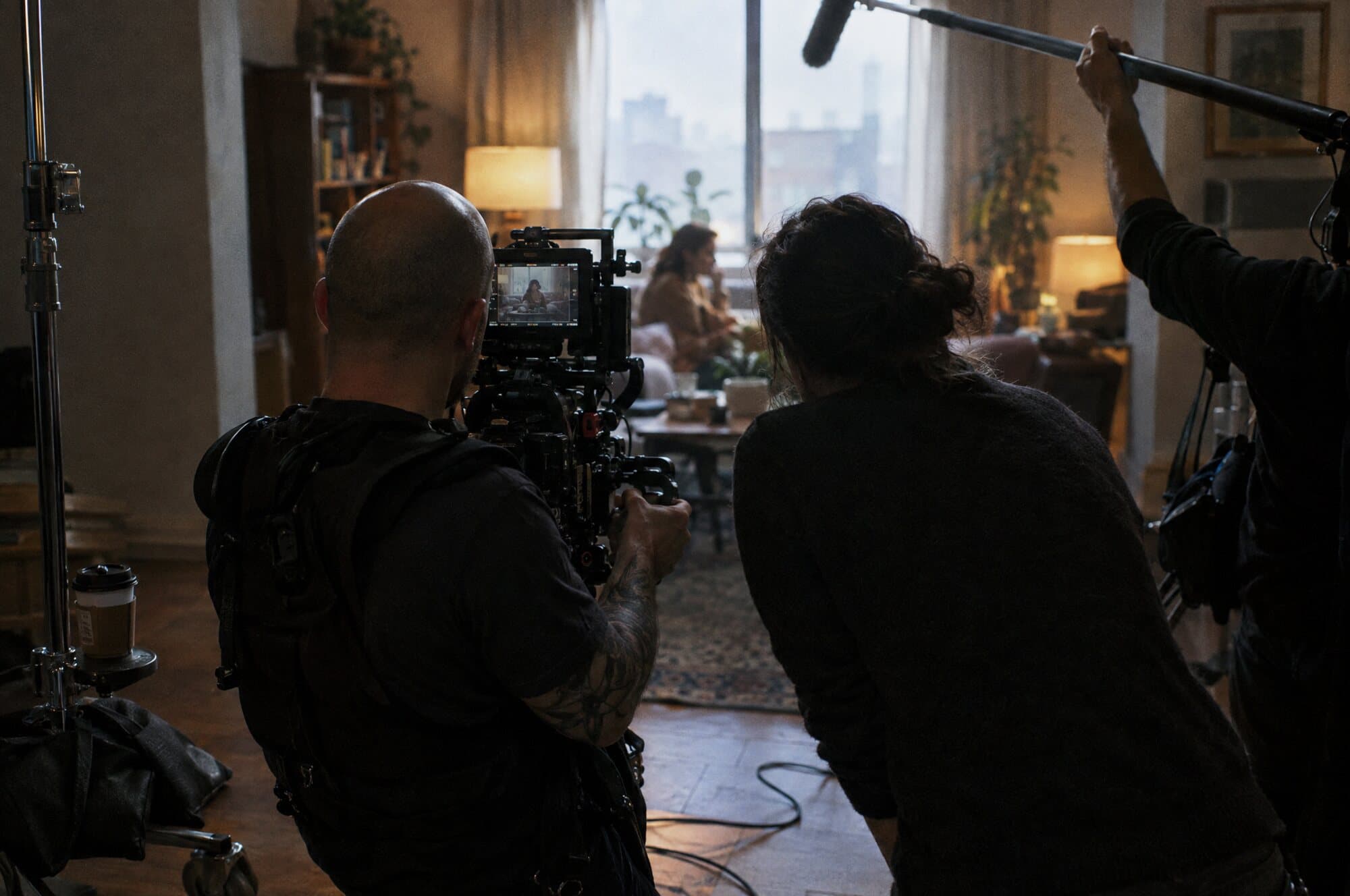
I get asked, fairly often, what separates a good LGBTQ+ campaign from a bad one. People expect the answer to be about casting: did the brand put a queer person in the ad. That question matters, but it is not the one that predicts whether the work will land. The question that predicts it is who was in the room writing the brief, directing the shoot, and approving the final cut before it ever reached an audience.
Casting a queer actor in a spot that a room with no lived connection to this community wrote, directed, and approved is a casting note attached to someone else's idea of what this community sounds like. I have watched that difference play out often enough, on both sides of the industry, to know it is not a subtle one. Audiences in this community can tell within seconds whether the people who made something understood it from the inside or approximated it from research.
The industry says the quiet part in its own study
I do not need to argue this from instinct alone, because the advertising industry has said it about itself. GLAAD's 2024 Visibility Perceptions in Advertising study surveyed two hundred decision-makers and marketing executives at advertisers and agencies, comparing their answers against a 2021 baseline. Ninety percent said it is very important to feature LGBTQ+ people in advertising, and the industry reported an eighty percent increase in saying this community matters to their business compared to three years earlier. Read on its own, that looks like real progress.
The industry is 55 percent more likely than in 2021 to say it does not have the expertise or knowledge to get LGBTQ+ representation right.
That is the finding from the same GLAAD study that tells the real story. Budgets went up. Stated importance went up. Confidence in knowing how to execute the work went down, by a wide and growing margin. I do not think that combination is a contradiction. I think it is what happens when a brand increases its stated commitment to representation without changing who is making the creative decisions. The intent scaled. The expertise did not, because expertise comes from including people who live this experience in the rooms where the actual choices get made, well before the casting call.
What community-led creative requires
This is where I think most brands stop short, even the well-intentioned ones. They will hire a queer talent for the campaign and consider the representation box checked, without asking who wrote the script that talent is performing, who directed how their story gets framed, or who had the authority to say no if something felt inaccurate or exploitative. Community-led creative means queer and trans people are involved from the brief stage forward, with real authority to shape the work, rather than brought in at the point where a face is needed on camera.
The question is not who is cast. It is who had the standing to say no.
I built The Gaygency around that principle specifically because I watched the alternative fail, repeatedly, at agencies with far more resources than this one. A creative team can research a community thoroughly and still miss the details that only lived experience catches: the phrase that reads as outdated, the visual cliche that reads as lazy, the tone that reads as performative rather than confident. Research closes some of that gap. It does not close all of it, and the part it leaves open is exactly the fifty-five percent GLAAD is describing.
Not every brand needs to build an in-house queer creative team overnight. Before a campaign ships, the questions worth asking are who is cast in it, who wrote it, who directed it, and who had the standing to flag a problem before the public did. Those questions separate a brand that is confident it is doing this well from a brand that is genuinely equipped to.
How I run review at this studio
Every campaign that comes out of The Gaygency goes through me before it ships, and I built that structure on purpose. Not because I think I catch every mistake alone, but because the review has to sit with someone who has the standing and the willingness to say a line, an image, or a framing is wrong, even after a client has already approved it once. That authority cannot live only with the person doing the casting. It has to live with whoever is closest to the finished piece before it reaches the public, and in a studio where most of the team is LGBTQIA+, that is most of the people in the room, not a single consultant brought in to sign off at the end.
I think that is the actual answer to the gap GLAAD's research describes. One queer creative asked to catch everything cannot close a fifty-five percent confidence gap alone. A brand closes it by building a process where community judgment sits at every stage a decision gets made, from the first line of the brief to the final export before the campaign goes live. That is slower than the alternative. It is also the only version of this work that holds up once the campaign is in front of the audience it claims to understand.
If your team wants creative built with that authority from the start, our creator partnerships work is structured around exactly this, and if you want to talk through a campaign before it ships, book a call.
Free checklist
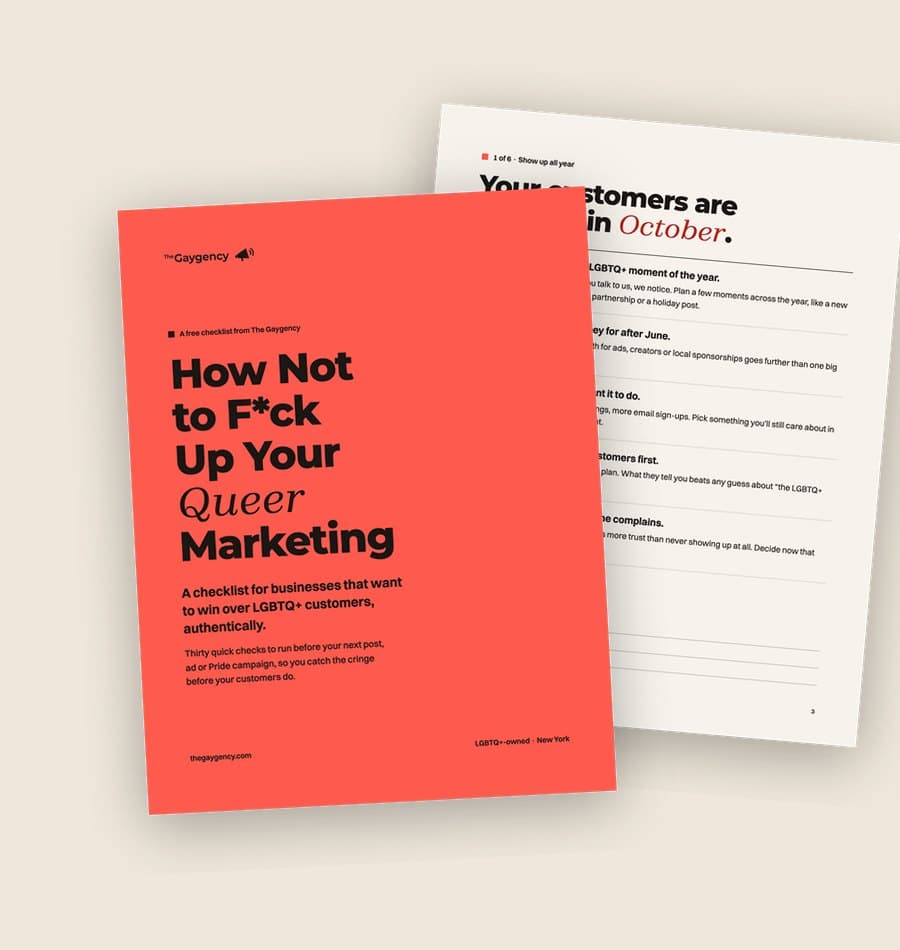
How not to f*ck up your queer marketing
A checklist for businesses that want to win over LGBTQ+ customers, authentically.
Thirty quick checks to run before your next post, ad or Pride campaign, so you catch the cringe before your customers do.
Delivered by email. No spam, ever.
Written by
Daniel Montelongo
Founder of The Gaygency and Gaydar. Ten years leading campaigns at Apple, Dentsu, and Ann Inc. before building the studio, where he leads every engagement.
About Daniel