Founder column
My read on the quiet-Pride era
By Daniel Montelongo, Founder · 11-27-26 · 4 min read
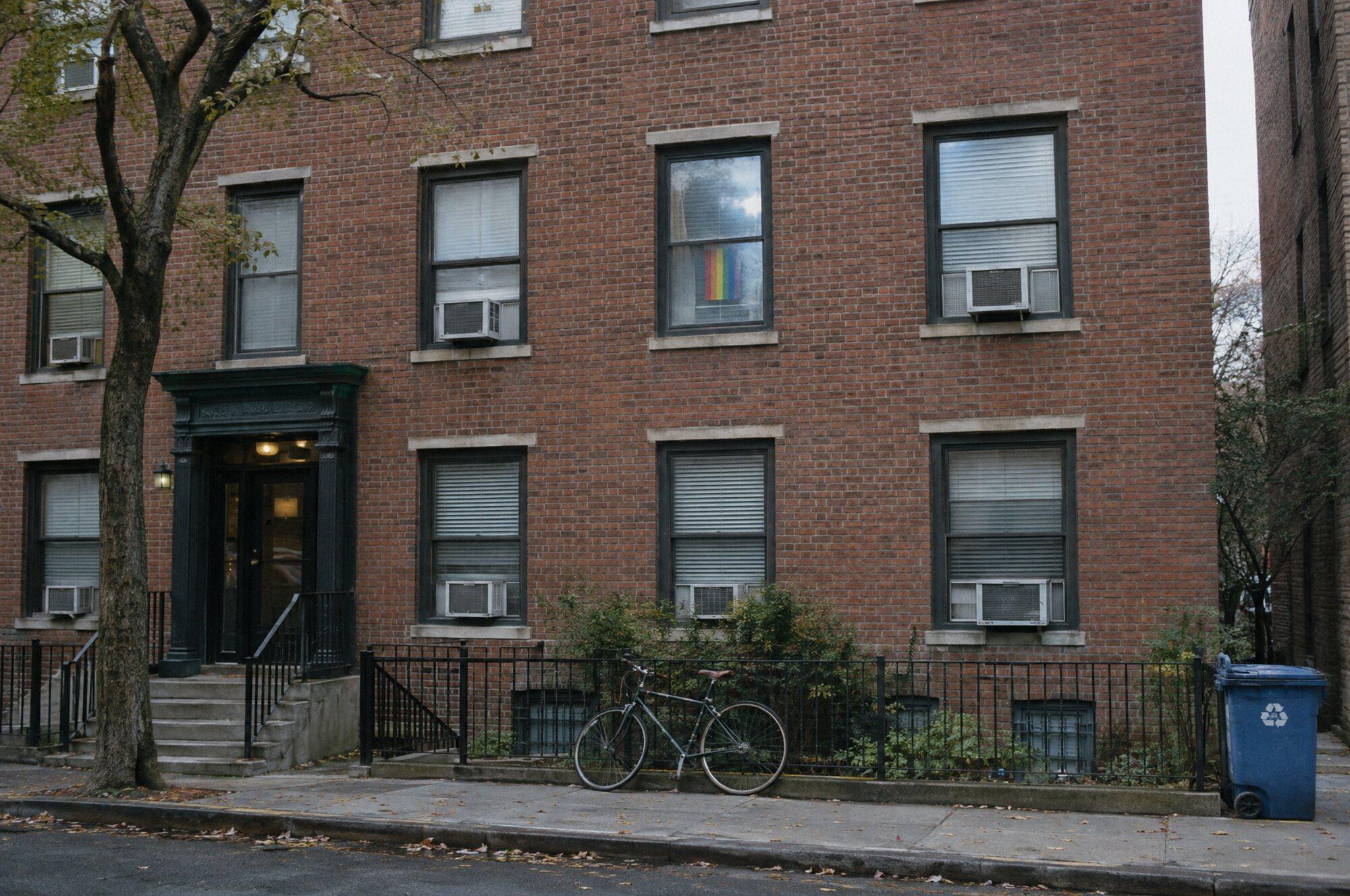
I spent 2025 watching a lot of brands go quiet, and I spent this year watching some of them decide to come back. Neither move surprised me, and neither one tells you what I think most people assume it tells you. I want to walk through what happened, because this is less a story about Pride month than about which brands understood what they were doing in the first place.
Gravity Research's 2025 Pride Pulse Poll found that 39 percent of the 49 communications executives in Gravity's Corporate Insiders Group said their company planned to scale back its public Pride engagement that year, compared with 9 percent who said in 2024, on a similar question, that they were changing their engagement (Gravity Research, 2025). That is not a small shift. It is a jump of thirty points in a single year, across companies large enough to have a real communications and legal apparatus weighing the decision, not a handful of brands making it up as they went. I do not think most of those companies pulled back because they stopped believing in anything. I think they pulled back because there was never much belief behind it to begin with. It was a seasonal marketing line, and seasonal marketing lines are the first thing cut when the political weather turns uncertain.
Why I never treated June as the point
The test was never how loud a brand was in June. It was whether that brand was still showing up in December, when no one was measuring it.
I built this studio around that idea, and I want to be specific about what it means in practice. A brand that only shows up during Pride month was never truly invested in this community. It was invested in a low-risk window where visible support cost the least and generated the most immediate goodwill. When the risk calculation changed in 2025, that same brand had nothing underneath the June campaign to fall back on: no relationships with LGBTQ+-owned vendors, no year-round creative partnerships, no actual product or policy commitments that a pulled ad budget does not touch. The pullback was not a betrayal of a deep commitment. It was the absence of one becoming visible.
I do not say that to be harsh about the brands that scaled back. I say it because it is the clearest evidence I have seen that the entire premise of Pride-month-only marketing was flawed from the start, rather than merely risky in a hard year. A strategy that only works when the political and cultural weather is calm was never built to hold up in a harder year, and 2025 was the year that tested it.
The community was watching the whole time, and the data on that is not ambiguous. The Human Rights Campaign Foundation's 2026 Pride in the Marketplace research found that 71.5 percent of LGBTQ+ consumers report buying less from brands they see as retreating, and 69.5 percent say they spend more with brands they see as staying present (HRC Foundation, 2026). Those two numbers describe a market that is not confused about what happened in 2025. It noticed exactly which brands went quiet, and it is already adjusting its spending based on that memory, independent of whether those brands come back this year, next year, or not at all.
What 2026 shows
This year told a more complicated story, and I think it is the more useful one. By June 2026, Insurance Journal reported that Mastercard, which had been named among the sponsors scaling back the year before, increased its Pride spending and sent roughly one hundred employees and executives to march, while NYC Pride added nearly a dozen more sponsors than the previous year (Insurance Journal, 2026). That is not a full return to the volume of visible sponsorship from before the pullback. It is a partial, visible rebound from a subset of brands, made deliberately and publicly rather than restored quietly.
A visible return is a different decision than a quiet one.
I think that distinction between a quiet retreat and a visible return matters more than the raw sponsorship numbers. A brand that pulls back without explaining why and later returns without acknowledging it did anything is treating the whole relationship as a dial to be adjusted based on outside pressure. A brand that comes back visibly, willing to be seen making that choice again, is at least being honest about the fact that showing up here was always a decision with reputational weight attached, in either direction.
What year-round commitment looks like
None of this changes how I think brands should approach this community, because our approach was never built around the assumption that June was the moment that mattered. It is built around the same specificity I write about everywhere else in this studio's work: real creative partnerships, media plans that run across the calendar, and relationships with LGBTQ+-owned vendors and creators that do not evaporate the moment a headline gets uncomfortable. A brand doing that work does not have a quiet-Pride problem, because it was never building a campaign that only made sense loudly, once a year.
Any brand watching this cycle should be asking whether anything it built holds up in the months nobody is watching, not whether to be loud or quiet in June. That is the only test that has ever mattered to me. If you want to build a year-round approach instead of a seasonal one, our brand strategy work starts exactly there, and if you want to talk through where your own commitment stands, book a call.
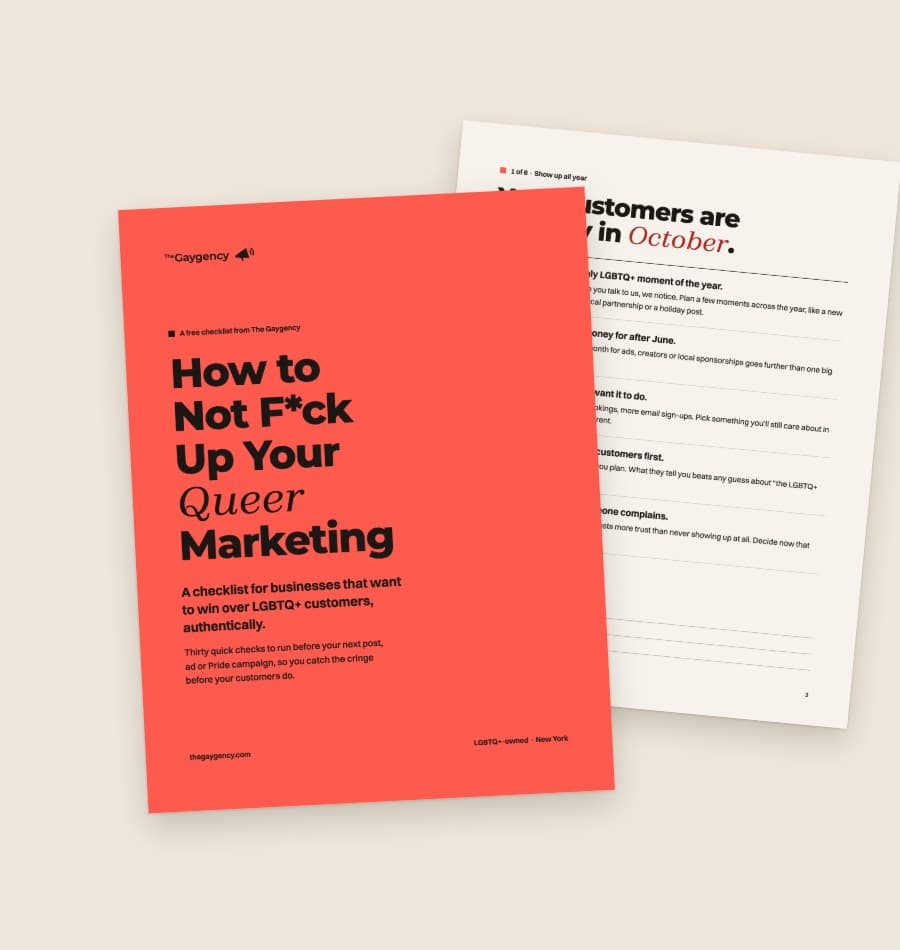
Free checklist
How to not f*ck up your queer marketing
A checklist for businesses that want to win over LGBTQ+ customers, authentically.
Thirty quick checks to run before your next post, ad or Pride campaign, so you catch the cringe before your customers do.
Delivered by email. No spam, ever.
Written by
Daniel Montelongo
Founder of The Gaygency and Gaydar. Ten years leading campaigns at Apple, Dentsu, and Ann Inc. before building the studio, where he leads every engagement.
About Daniel