Campaign Roundup
The Best LGBTQ+ Ad Campaigns of 2026 So Far
By The Gaygency · 07-26-26 · 7 min read
Pride marketing in 2026 was quieter than any year in recent memory. HRC's Corporate Equality Index recorded a 65% drop in Fortune 500 participation. Gravity Research found 39% of the 49 communications executives in Gravity's Corporate Insiders Group said their company planned to cut Pride engagement. Tampa Pride went on hiatus, a Grand Rapids Pride event was canceled after sponsors backed out, Arlington Pride was canceled after its city council declined to reinstate local LGBTQ+ protections, and NYC Pride ran a peer-to-peer fundraising push to cover a corporate shortfall. Against that backdrop, the campaigns that did run had a smaller audience of competitors and a larger amount of scrutiny to survive. The ones below cleared that bar. Every campaign here is real, ran in 2026, and is verifiable through the sources cited alongside it.
Diesel x Tinder: For Successful Loving
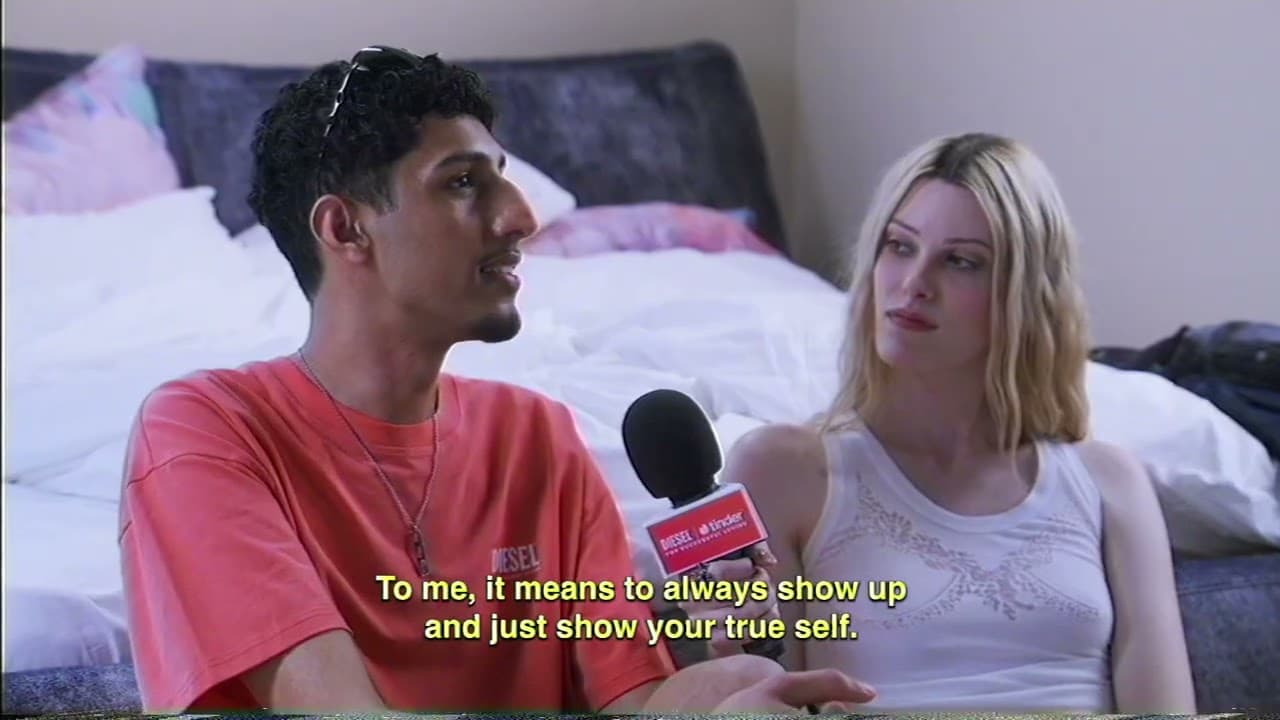
Diesel and Tinder unveiled "For Successful Loving" in May 2026, a Pride collaboration that Tinder's chief marketing officer Melissa Hobley called the platform's biggest brand collaboration to date. The partnership included a 17-piece capsule collection fronted by drag performer Gigi Goode, shot in lo-fi, VHS-style footage as a documentary-toned exploration of modern dating and identity, plus a combined $200,000 donation to Outright International, split evenly between the two companies through Diesel's OTB Foundation. The funding specifically targets employment access and entrepreneurship programs for LGBTQIA+ people in Colombia, South Africa, Ukraine, and the Philippines over a twelve-month period.
Why it works: the campaign reworked Diesel's own decades-old slogan, "For Successful Living," rather than borrowing generic Pride imagery, so the concept is specific to the brand instead of interchangeable with any other company's Pride push. The donation is named, dated, and geographically specific, which answers the "which portion, to whom" question that vaguer campaigns leave open.
Lime: Pride in Motion
Lime launched its 2026 global Pride campaign, "Pride in Motion," across more than 21 cities on three continents, including Albuquerque, Boise, London, and Sydney. Rather than running one national creative, Lime partnered with more than 24 local LGBTQ+ organizations, each city pairing with its own nonprofit and its own locally led activation. Lime's chief brand and communications officer Carolyn Rosebrough described the goal as a celebration of "community, connection and access."
Why it works: the campaign decentralizes both the funding and the political exposure. A national campaign with one message is one target for a coordinated backlash. Twenty-one separate local partnerships, each specific to the community it serves, are much harder to organize a single boycott around, and each one puts money directly into a local organization rather than a national ad budget.
Verizon: Look Behind You
Verizon's "Look Behind You" campaign, a four-and-a-half-minute short film directed by Nia DaCosta and starring "Heated Rivalry" actor Connor Storrie, had been viewed more than 35 million times as of its release window, according to Verizon CMO Leslie Berland. The film is a horror-tinged short built around Storrie's sudden pop-culture fame rather than his character's storyline, and it never references sexuality directly.
Why it works, and why it belongs in this list at all: it is the clearest 2026 example of what LGBTQ Nation and other outlets have called the return of "gay vague" advertising, brands leaning on the cultural weight of a queer-coded moment without naming it. Whether that counts as LGBTQ+ marketing is a fair argument, and we take it up directly in the FAQ below. What is not in question is that Verizon built a campaign around a queer creative moment, in a year when many brands avoided anything adjacent to LGBTQ+ visibility, and it became one of the most-watched brand films of the year.
Apple: 2026 Pride Collection
Apple introduced its 2026 Pride Collection in May, including a new Apple Watch Pride Edition Sport Loop woven from eleven colors of nylon yarn, a matching Pride Luminance watch face, and coordinated wallpapers across iPhone and iPad. Apple has run a version of this collection every year since 2017 and used its 2026 announcement to reiterate financial support for LGBTQ+ advocacy organizations. Coverage of the 2026 Pride season specifically noted that Apple's continued, unchanged investment stood out precisely because so many other major brands scaled back.
Why it works: consistency is the entire case. A one-time Pride product from a brand with no history reads as opportunistic. The same product from a brand that has done this every year for nearly a decade, without changing its behavior when doing so became politically costlier, reads as exactly what it is: a standing commitment rather than a seasonal one.
Hershey: Happiness Is the Real Gold
Ahead of the 2026 Winter Olympics in Milano Cortina, Hershey launched its first major brand campaign since 2018, "Hershey's. It's Your Happy Place," anchored by the film "Happiness Is the Real Gold." The spot features five Team USA Olympians and Paralympians, including figure skater Jason Brown, who is openly gay, reflecting on their families' support before being surprised on camera by their parents. The campaign included limited-edition chocolate medals sold through TikTok Shop.
Why it works, with the same caveat as Verizon: Brown's sexuality is never mentioned. He appears as one of five athletes telling a story about family, full stop. That is a second, higher-profile example of gay-vague advertising in the same Olympic cycle, and it belongs in a roundup of 2026 campaigns precisely because it shows the pattern is not limited to one industry or one show's cultural moment.
Sephora UK and Cult Beauty: quieter beauty-sector support
In the UK, Sephora's local wing continued its multi-year partnership with trans+ charity Not A Phase, showing up as the charity partner at the Mighty Hoopla festival with a spin-to-win activation and a makeup station. Separately, Cult Beauty launched a dedicated Pride beauty box built entirely from LGBTQ-founded and LGBTQ-owned brands, and partnered with the Queer Britain museum for a Pride weekend activation. Cult Beauty reported social views up 20% and engagement up 14% year over year compared to its 2025 Pride content.
Why it works: neither campaign centers a rainbow logo. Both center a named charity partner or a roster of LGBTQ-owned brands, which gives the campaign somewhere specific for the audience's attention and the brand's dollars to land, and the reported engagement lift suggests the audience noticed the difference between that and a seasonal product drop.
Six campaigns, six different production scales. The pattern that connects them is specificity, not budget.
What these six campaigns have in common
- A named partner organization or creator, not a generic Pride theme
- A specific dollar amount or a real product commitment, not vague language about "supporting the community"
- A history of doing this before 2026, or a clear reason the campaign exists this specific year
- LGBTQ+ people involved in making the work, not only appearing in it
None of these campaigns needed a bigger rainbow. They needed a more specific reason to exist.
The quietest section on this list, Sephora UK and Cult Beauty's low-key partnerships, saw real engagement gains without a single national ad. Volume was never the variable that mattered.
If a checklist for spotting the difference between this kind of work and a seasonal logo swap is useful, our guide on LGBTQ+ marketing versus rainbow washing walks through the five patterns to watch for before a brand commits to its own campaign. Every campaign above also had to survive a version of that same test internally, long before it reached the public, which is a large part of why it made this list and dozens of quieter, thinner efforts did not.
Frequently asked questions
Why did Pride advertising feel quieter in 2026 overall?
Political pressure and boycott risk pushed many large companies to cut public Pride campaigns, documented by the 65% drop in Corporate Equality Index participation and Gravity Research's finding that 39% of the 49 executives Gravity polled said their company planned to scale back. The campaigns that still ran had more scrutiny to survive, which raised the bar for what made the list.
Do these campaigns risk backlash the same way louder ones did?
Some do more than others. Lime's city-by-city structure and Sephora's charity-first framing are built to be harder to organize a single national backlash around. Diesel x Tinder and Apple have more national visibility and accepted that exposure directly.
What made Diesel x Tinder different from a typical Pride collection?
The named, dated, geographically specific donation and the fact that the concept came from the brand's own decades-old slogan rather than a generic rainbow theme. Specificity is what separates it from a seasonal merchandise drop.
Is gay-vague advertising, like the Verizon and Hershey campaigns, still LGBTQ+ marketing?
It is a real and growing category, and reasonable people disagree on whether it counts. It covers brands willing to build campaigns around openly queer talent and queer-coded cultural moments without naming sexuality directly, which is a meaningfully different choice than avoiding the moment altogether. Whether it counts as advocacy is a separate question from whether it counts as marketing.
Will this list still hold up by the end of 2026?
The campaigns and their facts are fixed. Whether they remain the strongest examples depends on what runs in the second half of the year, which is exactly why we treat this as a living roundup rather than a one-time ranking.
Building a campaign that earns a spot on next year's list starts with the same discipline every campaign above shares: a specific reason to exist, not a seasonal theme. Book a call and we will build yours.
Free checklist
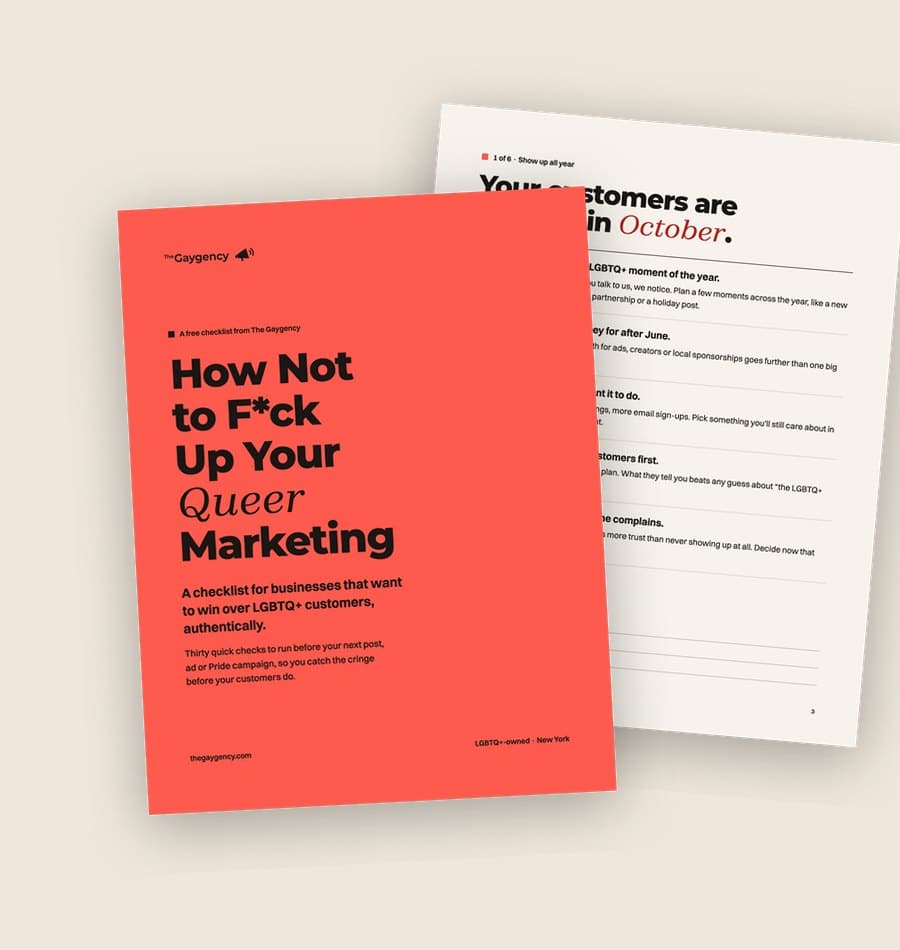
How not to f*ck up your queer marketing
A checklist for businesses that want to win over LGBTQ+ customers, authentically.
Thirty quick checks to run before your next post, ad or Pride campaign, so you catch the cringe before your customers do.
Delivered by email. No spam, ever.
Written by
The marketing and advertising agency for LGBTQ+ businesses and the brands that back them. Strategy, media buying, and brand systems with published results.
See the work