LGBTQ+ Marketing
LGBTQ+ Marketing vs. Rainbow Washing: How to Tell the Difference
By The Gaygency · 05-07-26 · 8 min read
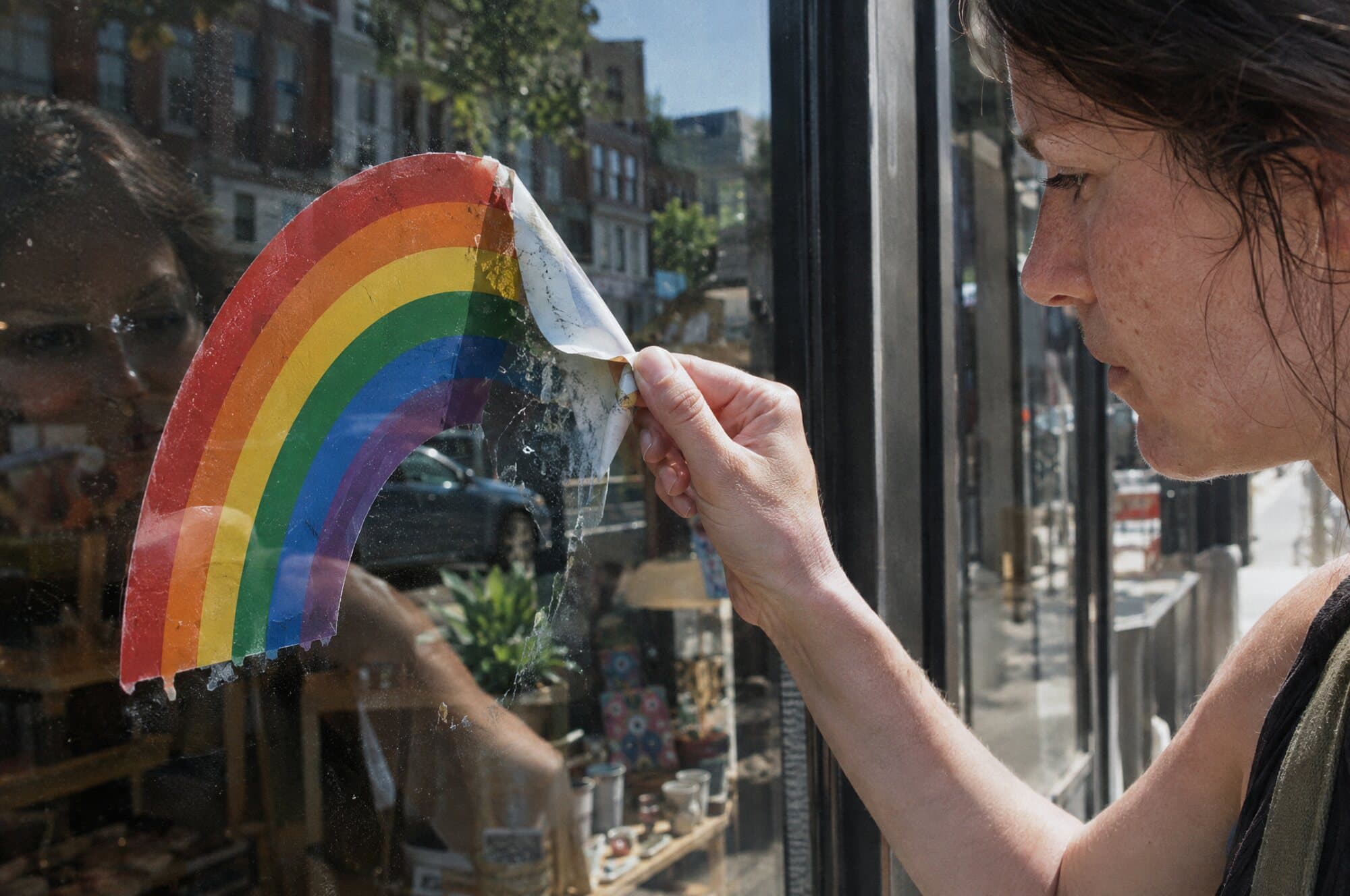
Every June, the same cycle plays out. Logos change. Limited-edition products appear. Brands that spent eleven months silent on anything touching LGBTQ+ communities post celebrations of "love is love." Then July 1 arrives and the rainbow disappears.
That is rainbow washing, and it stopped being a subtle problem years ago. Consumers, journalists, and advocacy organizations now document it in real time, with screenshots. What has changed more recently is the business context around it. Gravity Research's 2025 Pride Pulse Poll of the 49 communications executives in Gravity's Corporate Insiders Group, at Fortune 1000 and equivalent companies, found that 39% said their company planned to reduce its public Pride engagement (Gravity Research, 2025). At the same time, the HRC Foundation's Pride in the Marketplace 2026 consumer report found that 71.5% of LGBTQ+ consumers say they are buying less from companies they see as retreating from inclusion, and companies perceived as retreating are losing LGBTQ+ customers at roughly twice the rate of other consumers (HRC Foundation, 2026). Those two findings describe the same moment from opposite sides: the majors pulled back, and the community noticed exactly who did.
The money at stake is not a niche concern. The same HRC Foundation report puts LGBTQ+ consumer spending power at more than $1.4 trillion annually in the United States, and more than $3.9 trillion globally (HRC Foundation, 2026). That spending is currently deciding where to go next, and the early data says it is going to the brands that stayed.
The community keeps receipts. A brand's June is judged against its November, and both are public record.
The five patterns of rainbow washing
Rainbow washing is not always cynical. It often starts as a genuine impulse that stops at the logo. These are the patterns we see most, and that consumers have learned to spot:
Seasonal presence, annual absence. Pride content in June, silence the other eleven months. No LGBTQ+ voices in the regular content calendar, no partnerships, no policies. One campaign, then gone.
Products with no beneficiary. A Pride collection where none of the proceeds reach LGBTQ+ organizations. The collection captures community spending and returns nothing to the community that inspired it.
Donation math without numbers. "A portion of proceeds benefits LGBTQ+ causes." Which portion, of what, to whom? Five percent of $20,000 is $1,000. A brand that will not name the dollar amount usually has a reason.
Stock photo representation. Same-sex couples in the June campaign, and no LGBTQ+ presence anywhere else in the brand: not the website, not the annual report, not the team. Representation that exists only in licensed imagery is set dressing.
Geographic selectivity. Pride campaigns in markets where they sell, suppressed in markets where they might draw pushback. Support that switches off under pressure was never support. It was targeting.
What the real thing looks like
The difference between authentic LGBTQ+ marketing and rainbow washing is not production value or budget. It is consistency and accountability, which are cheaper than a Super Bowl spot and harder to fake.
Year-round presence. LGBTQ+ people appear in the brand's content, campaigns, and creative direction across the calendar, because they are part of who the brand serves and who builds it, not a theme month. This is the foundation of every campaign strategy we build for brands entering the market, and it shows up in ongoing organic social and paid social work as much as in the June push.
Policies that match the posters. Inclusive benefits, protections that name gender identity and sexual orientation, and political giving that does not quietly fund the opposite of the June message. Journalists cross-reference donation records against Pride campaigns every year. So do customers.
Named partnerships with named numbers. Not "supporting LGBTQ+ causes" but "partnering with this organization, donating this amount, funding this program." Specificity is what accountability looks like in a press release, and it is the same standard our public relations work holds every story to.
Community in the room, paid. Queer strategists, writers, photographers, and directors making the work, not only queer faces appearing in it. At market rate. Involvement that starts at the brief, not the casting call.
Positions that cost something. When legislation targets the community or pressure campaigns demand a retreat, silence is an answer. The 71.5% figure exists because consumers watched who went quiet and adjusted their spending accordingly.
Consistency is cheaper than a June campaign and worth more. Showing up in November costs a calendar entry. Disappearing costs the customer.
Why the market for specialists is thinner than the demand
Most companies handling this work are not equipped to do it well, and the gap is measurable. The ANA's LGBTQ+ Marketing Inclusion Survey found that 64% of brands doing LGBTQ+ marketing do not use a specialized agency at all. Among the ones that do, 75% chose a certified LGBT-owned shop (ANA, LGBTQ+ Marketing Inclusion Report, 2021). Read together, those numbers describe a market with real demand and thin supply: most companies are handling this work in-house or through a generalist agency with no specific track record in the audience, and the minority who bring in outside help overwhelmingly prefer a specialist once they compare the results.
That preference is not sentimental. A specialist brings firsthand cultural fluency instead of secondhand research, and an existing point of view on what reads as authentic versus performative. It is also why the five patterns above keep recurring at generalist agencies: nobody in the room has lived the difference between a campaign and a costume.
The audit to run before the campaign
If you sit on the brand side, skip "is our Pride campaign good?" and ask "would our own marketing survive the checklist our customers are already using?" Run it honestly:
The rainbow washing self-audit
- Does the brand have any LGBTQ+ presence in the other eleven months?
- Were LGBTQ+ people involved in the strategy and creative, or only photographed for it?
- Are donations named, in dollars, with the receiving organization identified?
- Do internal policies cover gender identity and sexual orientation, in writing?
- Would the campaign run unchanged in every market the brand sells in?
- Has leadership taken any public position when the community was under pressure?
Failing one question is a to-do list. Failing most of them means the campaign is extraction, and the audience will price it that way.
What to do instead
None of this is an argument for staying out. The community benefits from visible, sustained corporate support, and the $1.4 trillion figure is real. The argument is against participation that is purely extractive, because the audience can tell and the data now shows they act on it.
A credible approach, in order:
Start inside. Audit benefits, protections, and workplace culture before planning external creative. Marketing inclusion you do not practice is the exact gap journalists write about.
Build a year-round calendar. Three to five moments across the year where the brand shows up, planned with the same seriousness as June. World AIDS Day is December 1. Transgender Day of Remembrance is November 20. These are not campaign hooks. They are proof the attention is not seasonal.
Make one or two partnerships real. Multi-year commitments, disclosed amounts, employee involvement. One deep partnership, run through creator partnerships with the right community voices attached, outperforms five logos on five galas.
Staff the work with the community. Brief development, strategy, and production, not casting alone. This is where an agency that lives in the community differs from one that rents it for a month.
Hold the position everywhere. One campaign, every market. If that sentence makes the plan feel risky, the plan was smaller than the press release implied.
Small brands earn trust the same way big ones lose it: one consistent month at a time.
The standard is honesty, not perfection
Brands enter this work at different stages, and the community does not demand a spotless record. It demands a consistent one. Show up all year, name what you are doing in numbers, involve the people you are marketing to, and do not vanish when the calendar or the political weather changes.
The brands doing this now are compounding trust while a meaningful share of the majors sit out. For enterprise teams whose roster agency covers this audience one month a year, that gap is the opportunity: the audience is large, loyal, documented, and currently re-deciding where it spends. The brands it chooses will be the ones that treated it like a market, not a moment.
Frequently asked questions
What exactly is rainbow washing?
Rainbow washing is when a company adjusts its branding, messaging, or visuals to appear supportive of the LGBTQ+ community during Pride season without matching internal policy, philanthropic giving, or business practice the rest of the year. The tell is timing: support that appears every June and disappears every July.
How can I tell if a brand's Pride marketing is authentic?
Check whether it survives outside June. Look for LGBTQ+ presence in the brand's content calendar the other eleven months, named partnerships with disclosed dollar amounts, internal policies that match the external messaging, and a campaign that runs the same way in every market the brand sells in. The rainbow washing self-audit above walks through all five checks.
Do consumers punish rainbow washing with their wallets?
Yes, measurably. The HRC Foundation's 2026 research found 71.5% of LGBTQ+ consumers report buying less from companies they see as retreating from inclusion, and that retreating companies lose LGBTQ+ customers at roughly twice the rate of other consumers (HRC Foundation, 2026).
Is Pride Month marketing still worth doing?
Yes, as one part of a year-round strategy rather than the entire strategy. A June-only presence now reads as a warning sign to a meaningfully large share of this audience, because consumers actively track whether support disappears after the month ends.
What should a brand do instead of a one-off Pride campaign?
Audit internal policy before external creative, build a calendar with three to five moments across the full year, commit to one or two real partnerships with disclosed numbers, staff the work with LGBTQ+ strategists and creatives, and hold the same position in every market. Consistency, not budget, is what separates this from rainbow washing.
If you want help building a year-round approach instead of a June scramble, book a call and we will walk through where your current calendar has gaps.
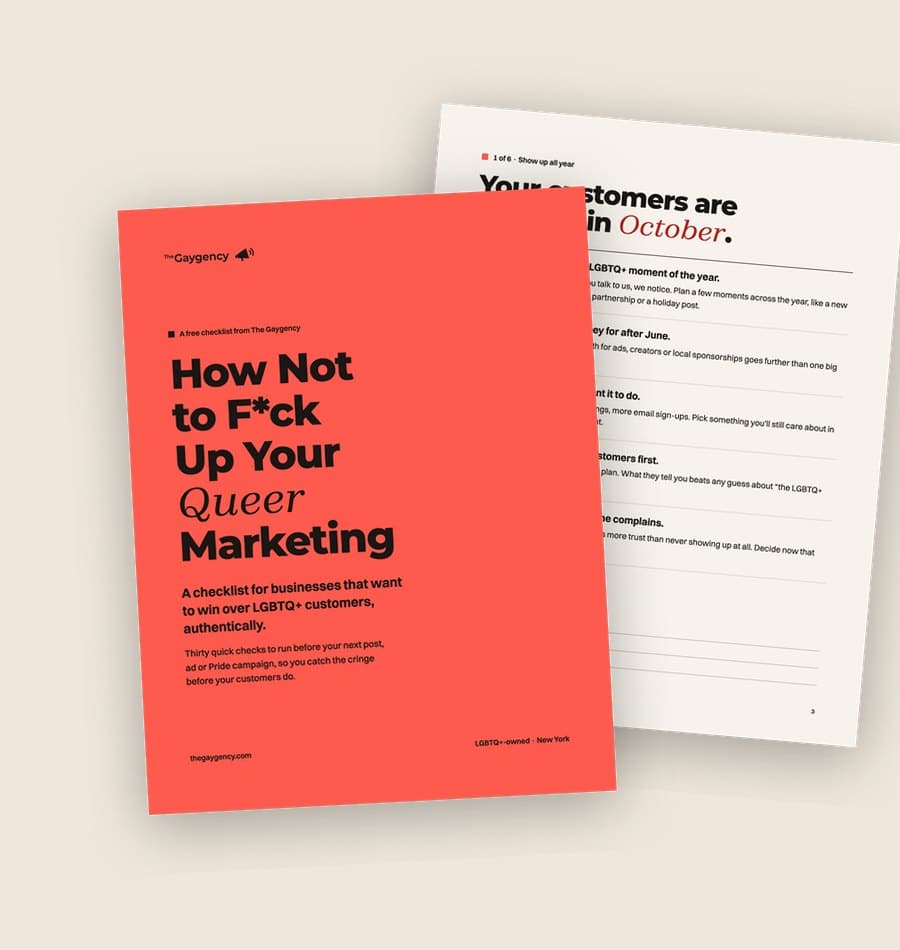
Free checklist
How not to f*ck up your queer marketing
A checklist for businesses that want to win over LGBTQ+ customers, authentically.
Thirty quick checks to run before your next post, ad or Pride campaign, so you catch the cringe before your customers do.
Delivered by email. No spam, ever.
Written by
The marketing and advertising agency for LGBTQ+ businesses and the brands that back them. Strategy, media buying, and brand systems with published results.
See the work