LGBTQ+ Marketing
15 LGBTQ+ Marketing Examples That Worked (and Why)
By The Gaygency · 08-03-26 · 9 min read
Most "best LGBTQ+ ads" lists are opinion pieces built on vibes. This one is built on receipts: what each brand did, what happened after, and where that is documented. Twelve of these are campaigns from other companies, spanning 1986 to 2023. The last three are campaigns we ran ourselves, included so you can see the same principles working at a fraction of the budget.
If your team is deciding how loud to go and how to defend that decision to a brand strategy committee or a board, these are the choices that separated a campaign that lasted from one that got deleted by July.
1. Absolut, "Chosen Families" (2022)
Absolut built its 2022 Pride campaign, "Chosen Families," around real stories of chosen family and the safe spaces that hold them, rather than around generic Pride imagery (source: The Absolut Company, Pride 2022 campaign). Absolut had been advertising in LGBTQ+ media since the early 1980s, so the 2022 push read as a continuation of decades of presence, not a new performance for the moment.
2. JCPenney, Mother's Day and Father's Day family ads (2012)
After hiring Ellen DeGeneres as spokesperson drew a boycott call from the group One Million Moms, JCPenney did not retreat. It ran a Mother's Day catalog featuring a real couple, Wendi and Maggie, then a Father's Day ad with a real two-dad family, Cooper Smith and Todd Koch (source: Hollywood Reporter, May 2012). The Father's Day ad photo drew 50 million views in its first month, per the retailer's own case study documented by Marketing the Rainbow. The boycott group eventually abandoned its campaign.
The couples in these early ads were not actors playing a demographic. They were customers and employees whose stories the brand happened to be positioned to tell.
3. Honey Maid, "This Is Wholesome" and the follow-up "Love" (2014)
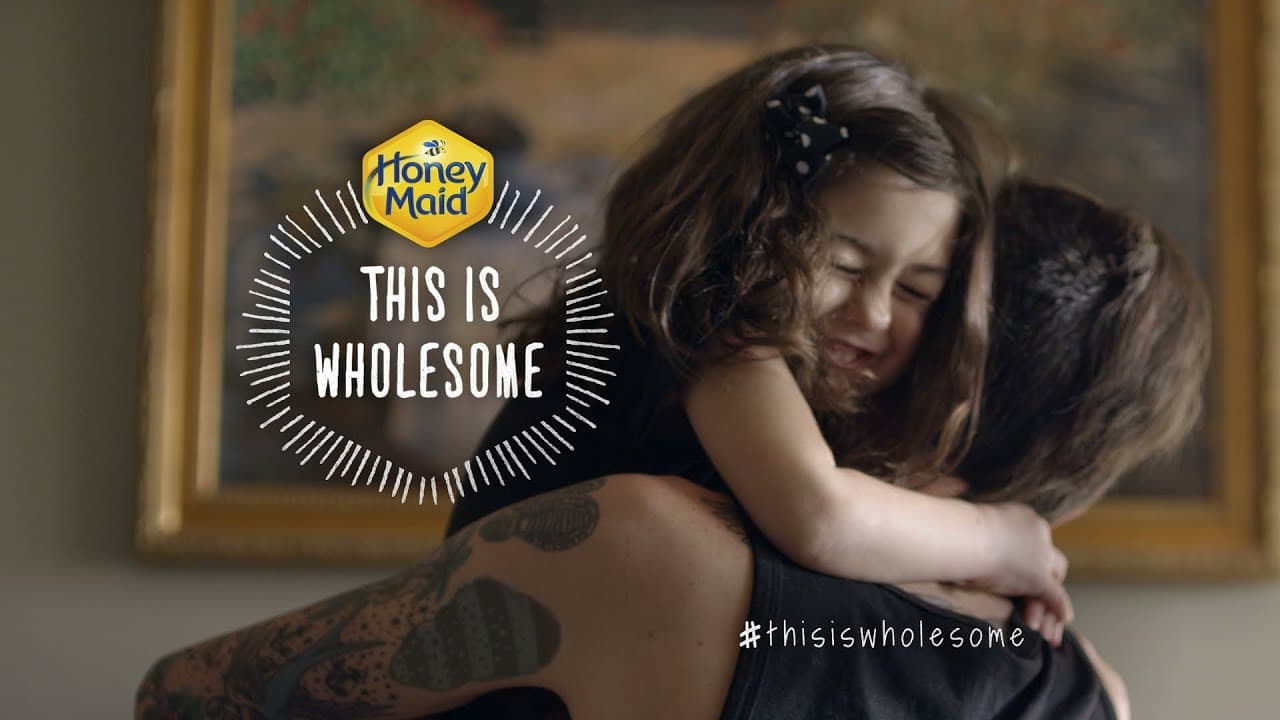
Honey Maid's "This Is Wholesome" ad featured several family types, including two dads, and drew complaints calling it an attempt to normalize behavior the critics opposed. The brand's response was a second ad, "Love," showing artists rolling the negative comments into a sculpture that spelled the word "love." Honey Maid reported it received ten times more positive responses than negative ones after the follow-up ran (source: USA Today, April 2014). The company did not apologize or pull the original ad. It answered criticism with more creative work instead of a statement.
4. Campbell's Soup, "Kyle and Reid" (2015)
A Star Wars-themed soup ad featured a real gay couple, David Monahan and Larry Sullivan, each trading the line "I am your father" while feeding their son. One Million Moms called for a boycott; the ad passed 180,000 YouTube views and drew mainstream press, including a defense from Stephen Colbert on The Late Show the same week (source: HuffPost, Advocate, October 2015). Campbell's framed the spot as one entry in a broader campaign about the changing American family, not a standalone Pride gesture, which gave it cover as a brand position rather than a stunt.
5. Wells Fargo, "Learning Sign Language" (2015)
Made by BBDO San Francisco, this ad showed a lesbian couple learning American Sign Language to prepare for adopting a deaf daughter. Evangelist Franklin Graham called for a boycott of the bank; Wells Fargo declined to pull the campaign (source: Advocate, June 2015). The emotional hook, adopting a child, drew in an audience wider than the identity of the couple alone.
Every early campaign on this list drew an organized boycott call, and the brands that held their position kept their customers.
6. Nike, "Unlimited," featuring Chris Mosier (2016)
Ahead of the Rio Olympics, Nike's global "Unlimited" campaign included Chris Mosier, the first known transgender athlete named to a U.S. national team (source: SiriusXM Media, history of LGBTQ+ advertising). Nike placed Mosier inside a roster of elite athletes rather than in a separate spot about identity, and treated the story as an athletic achievement first.
7. Mastercard, True Name (2019)
True Name let transgender and non-binary cardholders print their chosen name on a physical card without a legal name change. Mastercard's own campaign materials cite research that 59 percent of non-binary people feel unsafe while shopping because of how they are addressed. The program hit 3 billion impressions within three weeks of launch and won the Cannes Lions Grand Prix for Brand Experience and Activation in 2021 (source: Nathy Aviram case study; Ad Age, 2021). It worked because it was a product change, not an ad about one. Mastercard fixed something that excluded transgender customers instead of making a spot about acceptance.
Mastercard did not run an ad about acceptance. It changed what got printed on the card.
8. Gillette, "First Shave" (2019)
Following backlash to its "We Believe" ad earlier that year, Gillette released "First Shave," showing Samson Bonkeabantu Brown, a transgender man, shaving for the first time with his father's guidance (source: ABC7 News; Wikipedia, May 2019). The story centered on a father-son ritual, a familiar advertising trope, with one detail changed. Public reception ran measurably warmer than the earlier spot had.
9. Skittles, Pride Packs and QueeR Codes (2021)
Skittles turns its packaging gray for Pride each year on the logic that "only one rainbow matters," and in 2021 layered on a QueeR Codes activation: four LGBTQ+ artists painted murals in Newark, Nashville, Atlanta, and San Antonio, each carrying a scannable code linking to the artist's own work (source: Event Marketer, 2021). Removing color drew more attention than adding it would have, and the murals put real commissions behind LGBTQ+ artists instead of the brand's own logo.
10. LEGO, Everyone Is Awesome (2021)
LEGO designer Matthew Ashton, who is gay, created an 11-minifigure set in Pride flag colors, released with no branding beyond the LEGO logo itself. It came from an out employee's own project inside the company, not from a marketing brief, which is a different kind of authorship than most Pride merchandise can claim.
The pattern in these examples, real people and real product changes, does not require a global budget to execute.
11. Harry's, Pride Shave Set and The Trevor Project (ongoing)
Grooming brand Harry's has brought its Shave with Pride set back year after year, with US profits routed to The Trevor Project, a suicide-prevention nonprofit for LGBTQ+ youth (source: Adweek; The Trevor Project). The partnership has outlasted any single June, which is the one detail most Pride merchandise gets wrong.
12. Doritos Mexico, "Bold Love" (2023)
Released for Valentine's Day rather than June, "Bold Love" was the fifth chapter in Doritos Mexico's #OrgulloTodoElAño ("Pride All Year") campaign, telling a queer love story built for a mainstream holiday rather than a Pride-month slot (source: LBB Online, January 2023). The release date itself was the statement. Running a Pride-themed ad in February made the "all year" claim in the campaign name literal instead of aspirational.
The same logic that won Cannes Lions for Mastercard works at a fraction of the budget: fix the real problem first, then let the campaign describe what changed.
The same principles at a different budget
The first twelve examples ran on national or global budgets. These three are ours, at the scale most of our clients operate at, using the same reasoning: build for the audience that already trusts the brand, and let the story lead the spend.
13. Nasty Pig, a content and paid social system built on an existing audience
We rebuilt Nasty Pig's paid social program and content pipeline around the audience the brand already had instead of a rented one. Return on ad spend reached 7.85x, and site conversion moved from 1 percent to 2.5 percent. Nasty Pig had more than four decades standing inside its community already; the system built distribution for a message that audience already trusted, rather than writing a new one.
14. Oasis, a press-first launch
Before Oasis opened its doors, we ran a campaign strategy built on story before spend. Twenty-plus press features landed in 7 days, and 50 percent of the venue's opening-weekend tickets sold within 24 hours of the first coverage. Press ran first and ads ran second, so paid media had a story to amplify instead of a product to introduce cold.
15. Out Adventures, paid social lead generation
We rebuilt the travel operator's paid social account structure and lead follow-up, cutting cost per lead from $7.47 to $3.64 while lead volume grew to 6,618. Fixing tracking and audience structure before scaling spend is standard practice, but it mattered more here because a niche travel audience punishes wasted impressions harder than a mainstream one does.
Before you greenlight a campaign, run it against four checks:
- Does the offer, product, or donation still exist in November, not only June?
- Is the story coming from a real customer or employee, or from a casting call?
- What changes on the ground, beyond the screen: a policy, a product, a price, a partnership?
- Who gets paid: an LGBTQ+ artist, creator, or organization, or only the brand's own media buy?
If your team is weighing how far to go and how to defend that decision internally, that risk calibration is exactly what our enterprise engagements are built to work through with brand and legal teams before a single asset ships.
Frequently asked questions
What makes an LGBTQ+ marketing campaign successful?
The campaigns above share three traits: a real person or product change at the center instead of a casting call, presence that continues after June, and a specific dollar or policy commitment the brand is willing to name. Vague statements of support without a specific action are the pattern behind most campaigns that get forgotten or mocked.
Do LGBTQ+ inclusive ads drive sales?
The Human Rights Campaign Foundation's 2026 "Pride in the Marketplace" research, reported by CNBC on June 17, 2026, found 69.5 percent of LGBTQ+ consumers say they increase spending with brands they see as supportive, and 71.5 percent say they buy less from brands they see as retreating. The direction of the effect runs both ways, which is why consistency, not a single ad, is the variable that predicts results.
What is the risk of LGBTQ+ marketing backlash?
Every example above except the three Gaygency case studies drew public criticism from at least one organized group. None of the brands that held their position lost the fight in the market: JCPenney, Honey Maid, Campbell's, and Wells Fargo all kept the campaigns running. The brands that retreat under pressure are the ones the 2026 buycott data above is measuring.
Should small businesses run LGBTQ+ inclusive campaigns?
Yes, and the version that works at a small scale looks like Nasty Pig or Out Adventures above: build for the audience you already have, tell a real story instead of a rented one, and measure it the same way you would any paid channel.
How has LGBTQ+ advertising changed over time?
The earliest examples here, from Absolut in the 1980s through the JCPenney and Honey Maid ads of 2012 to 2014, were about whether a brand would show LGBTQ+ people at all. The more recent examples, Mastercard's True Name and Doritos Mexico's February release date, are about whether the brand changed something real, beyond who appears in the ad. That shift is the standard your next campaign will be measured against.
Ready to build the next one on your list. Book a call and we will start with the story that is already true about your business.
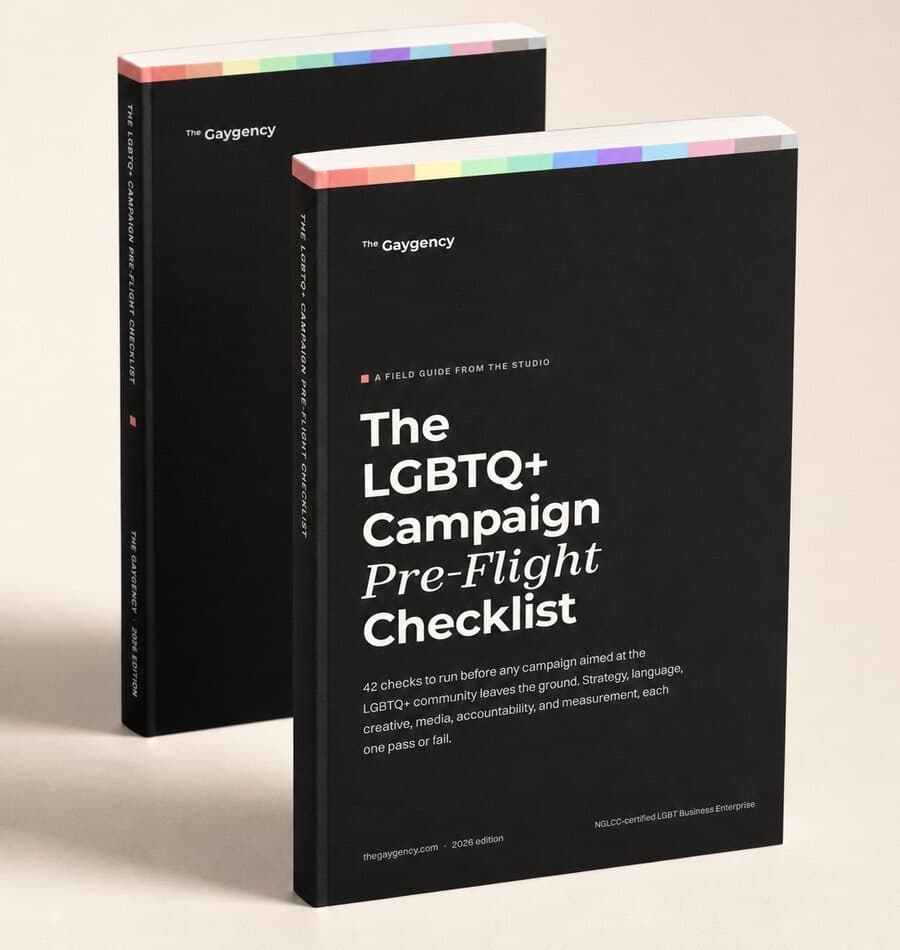
Free campaign guide
Would your campaign pass pre-flight?
The same 42 checks we run inside the studio before any campaign aimed at the LGBTQ+ community goes live.
Delivered by email. No spam, ever.
Written by
The marketing and advertising agency for LGBTQ+ businesses and the brands that back them. Strategy, media buying, and brand systems with published results.
See the workKeep reading