LGBTQ+ Marketing
Gay vague advertising: definition and 2026 examples
By The Gaygency · 10-15-26 · 8 min read
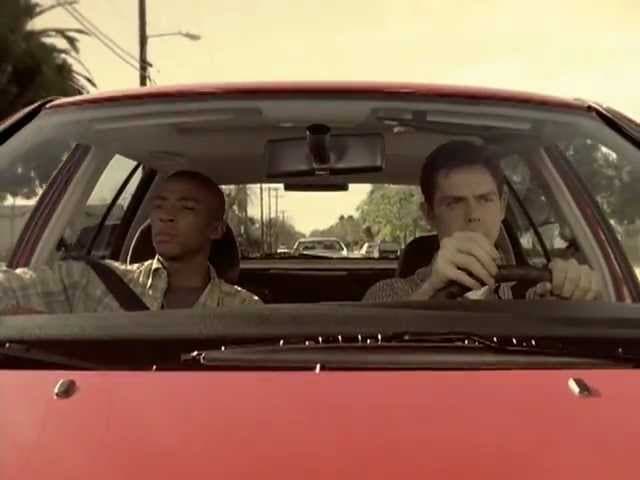
Gay vague advertising uses imagery or language ambiguous enough to read as queer to LGBTQ+ audiences while remaining deniable to everyone else. Advertising critic Michael Wilke coined the term in 1997, describing a Volkswagen ad structured around exactly that ambiguity.
The trade press is documenting the same technique again in 2026, in a climate where public Pride sponsorship is shrinking rather than growing.
Where the term comes from
Wilke wrote about it first in Advertising Age. The ad was for Volkswagen: two men pick up a chair together, presumably to bring home, and the spot never says who they are to each other. Wilke asked Volkswagen about it directly, and the company told him it had not intended the pair to read as a couple, but that it was fine if viewers thought so anyway (LGBTQ Nation, 2026, recounted by Wilke). That answer is the whole technique in one sentence: don't confirm it, don't deny it, let the reading do the work.
Academic researchers had already been describing a version of this. Media scholar Katherine Sender's 1999 study in Critical Studies in Mass Communication, "Selling Sexual Subjectivities: Audiences Respond to Gay Window Advertising," used the term "gay window advertising" for the same pattern: ads coded with a subtext meant to be legible to LGBTQ+ audiences while reading as unremarkable to everyone else. Wilke's "gay vague" and Sender's "gay window" describe the same maneuver from two different vantage points, one from inside the ad industry and one from media studies.
The two ads everyone points to
Subaru, mid-1990s. After noticing unusually strong sales among lesbian customers, Subaru ran a campaign built entirely on plausible deniability. Cars in the ads carried license plates reading "XENA LVR," "P-TOWNIE," and "CAMP OUT," under the headline "Different Drivers. Different Roads. One Car." A general audience saw a wordplay gag. Lesbian viewers recognized a reference to Xena: Warrior Princess, a show with a large lesbian following, and to Provincetown, a well-known queer resort town. Subaru never said any of this out loud (Medium, 2025, Michael Wilke's account of the campaign).
Abercrombie & Fitch, 1990s into the 2000s. Photographer Bruce Weber shot the brand's quarterly catalog, filling it with shirtless young men in staged, sometimes wrestling, sometimes explicitly homoerotic poses, framed as all-American youth culture rather than as anything queer. A&F disavowed the most direct version of this, a 2012 Bruce Weber video series of men wrestling that included a same-sex kiss, saying the ads were not the brand's own (Business Insider, 2012). The catalog's commercial success depended on the same ambiguity Subaru used: close enough to read as queer that it built real affinity with gay male consumers, distant enough that the brand never had to own it.
"It didn't intend for the ambiguous guys to be a gay couple, but it was okay for viewers to think so." That is how Volkswagen described its own ad to Michael Wilke in 1997, and it is still the clearest one-sentence definition of the technique thirty years later.
Subaru and Abercrombie ran the same maneuver from opposite directions, one coding its references in license plates and the other in catalog photography, and neither brand ever confirmed the reading.
Why it existed in the first place
Gay vague advertising is a product of a specific set of constraints. In the 1990s, a brand that ran an explicitly gay-inclusive ad risked a real backlash from a mainstream audience, distributor pushback, or a boycott, and most companies were not willing to absorb that risk for a market they had not yet proven was worth the exposure. Coding let a brand build recognition and loyalty with LGBTQ+ consumers without making a public claim it would then have to defend. It was a hedge, not a statement.
Why the trade press is talking about it again in 2026
The environment that made gay vague advertising a sensible hedge in the 1990s has partly returned, for different reasons. Gravity Research's 2025 Pride Pulse Poll found that 39% of large companies planned to reduce their public Pride engagement (Gravity Research, 2025), and GLAAD and Kantar's 2023 Advertising Visibility Index, the first data-backed audit of its kind, found that only 14 of more than 400 national TV ads from the top ten US advertisers, about 3%, were LGBTQ-inclusive at all, and that every inclusive ad in the study scored "insufficient" on representation quality (GLAAD and Kantar, 2023). Brands that still want the loyalty of LGBTQ+ consumers, without the exposure of a public Pride campaign, have an old playbook available to them again.
LGBTQ Nation documented a current example directly. In June 2026, the site covered how the stars of Heated Rivalry, the HBO hockey drama about two closeted-then-out professional players, began appearing in a wave of advertiser campaigns that the outlet described as "a return to gay vague," even as Pride sponsorships were struggling to hold on to their usual backers (LGBTQ Nation, 2026).
A show about hockey players who scored with each other is now scoring cheeky ad placements of its own, in what LGBTQ Nation called a return to gay vague. Wilke himself made the same observation earlier that year, writing in LGBTQ Nation in February 2026 that the technique he named in 1997 was showing up again in that year's Super Bowl ad slate, this time against a backdrop of pullback rather than expansion (LGBTQ Nation, 2026).
There is also a platform-level reason coding is regaining value. Meta removed sexual-orientation and LGBTQ-culture interest categories from its ad targeting in 2022, and eliminated detailed targeting exclusions in March 2025, meaning brands can no longer aim a campaign at LGBTQ+ audiences with platform tools the way they once could. Cultural coding does the targeting work that the platform's own menu used to do: an audience recognizes itself in the ad without the platform ever having to identify who saw it.
With Meta's orientation-based targeting categories gone since 2022, the coding now happens in the creative itself, because the audience has to find the ad rather than the platform finding the audience.
Gay vague is not the same failure as rainbow washing
The two get confused because they both involve a brand's relationship to LGBTQ+ audiences falling short of what it appears to be. They are not the same problem. Rainbow washing is a timing and consistency failure: a brand shows up in June and disappears the other eleven months, or names a cause without naming a dollar figure behind it. Gay vague advertising is a representation choice: the ad itself is built to be read two ways by two audiences, and it can run in October or January exactly as easily as June. A brand can run gay vague creative consistently, all year, without ever committing rainbow washing's seasonal-absence pattern. It can also run one Pride campaign a year, loudly, and never touch gay vague coding at all. They intersect sometimes. They are not the same failure.
When gay vague makes sense, and when it does not
- A category where explicit representation still creates real commercial risk in some of your markets, and coding lets you serve all of them consistently.
- A brand whose internal policies and workplace practices already back up genuine LGBTQ+ inclusion, so the ambiguity is a creative choice and not a cover for having nothing behind it.
- A campaign built with LGBTQ+ creatives in the room, so the coding reads as an inside reference rather than a guess at one.
- It does not make sense as a way to claim credit for representation while avoiding any actual commitment. If the honest answer to "would we say this out loud" is no, the ad is not vague, it is evasive.
What this means for how a brand chooses
The decision is not "gay vague or nothing." It is a spectrum, and where a brand lands on it should follow from real constraints, not guesswork. A messaging framework makes that decision explicit instead of accidental: naming which audiences a piece of creative is speaking to, in what register, and what the brand is and is not willing to say plainly in each market. A visual identity system built with that framework in mind can hold coded and explicit executions side by side without contradicting itself. Neither choice is inherently more honest than the other. What makes either one work is whether the substance behind the ad matches the claim, spoken or coded, that the ad is making.
For brands weighing this against a broader, less predictable climate, the question is closer to the calibration work we do with artists, creators, and makers navigating platforms and audiences that shift under them: how loud to be, in which channel, is a strategy decision, not an instinct.
Frequently asked questions
What is gay vague advertising?
Gay vague advertising uses imagery or language ambiguous enough to be read as queer by LGBTQ+ audiences while remaining plausibly deniable to a general audience. The term was coined by advertising critic Michael Wilke in 1997 to describe a Volkswagen ad depicting two men who may or may not have been a couple.
Who coined the term "gay vague"?
Advertising critic Michael Wilke, writing in Advertising Age in 1997. Media scholar Katherine Sender used the related academic term "gay window advertising" in a 1999 study describing the same pattern of coded imagery.
Is gay vague advertising the same as rainbow washing?
No. Rainbow washing is a consistency failure, showing up only in June with no follow-through the rest of the year. Gay vague advertising is a representation choice about how explicitly an ad names its subject. A brand can commit one failure without the other.
Is gay vague advertising making a comeback in 2026?
Trade coverage says yes. LGBTQ Nation described advertiser campaigns tied to the HBO series Heated Rivalry as "a return to gay vague" in June 2026, and Wilke wrote in February 2026 that the pattern had reappeared in that year's Super Bowl ad slate, against a backdrop of broader Pride sponsorship pullback documented by Gravity Research in 2025.
Should my brand use gay vague advertising?
Only if the ambiguity is a genuine creative choice backed by real internal commitment to LGBTQ+ inclusion, not a way to claim credit while avoiding a plain statement. The checklist above is a reasonable gut check before committing creative to it.
Full definitions of related terms, including rainbow washing and pink money, live in our LGBTQ+ marketing glossary. If your team is deciding how explicit to be with your next campaign, book a call and we will help you find the right register for your audience and your risk tolerance.
Free checklist
How not to f*ck up your queer marketing
A checklist for businesses that want to win over LGBTQ+ customers, authentically.
Thirty quick checks to run before your next post, ad or Pride campaign, so you catch the cringe before your customers do.
Delivered by email. No spam, ever.
Written by
The marketing and advertising agency for LGBTQ+ businesses and the brands that back them. Strategy, media buying, and brand systems with published results.
See the workKeep reading