Brand Strategy
LGBTQ History Month Campaigns That Don't Pander
By The Gaygency · 10-01-26 · 7 min read
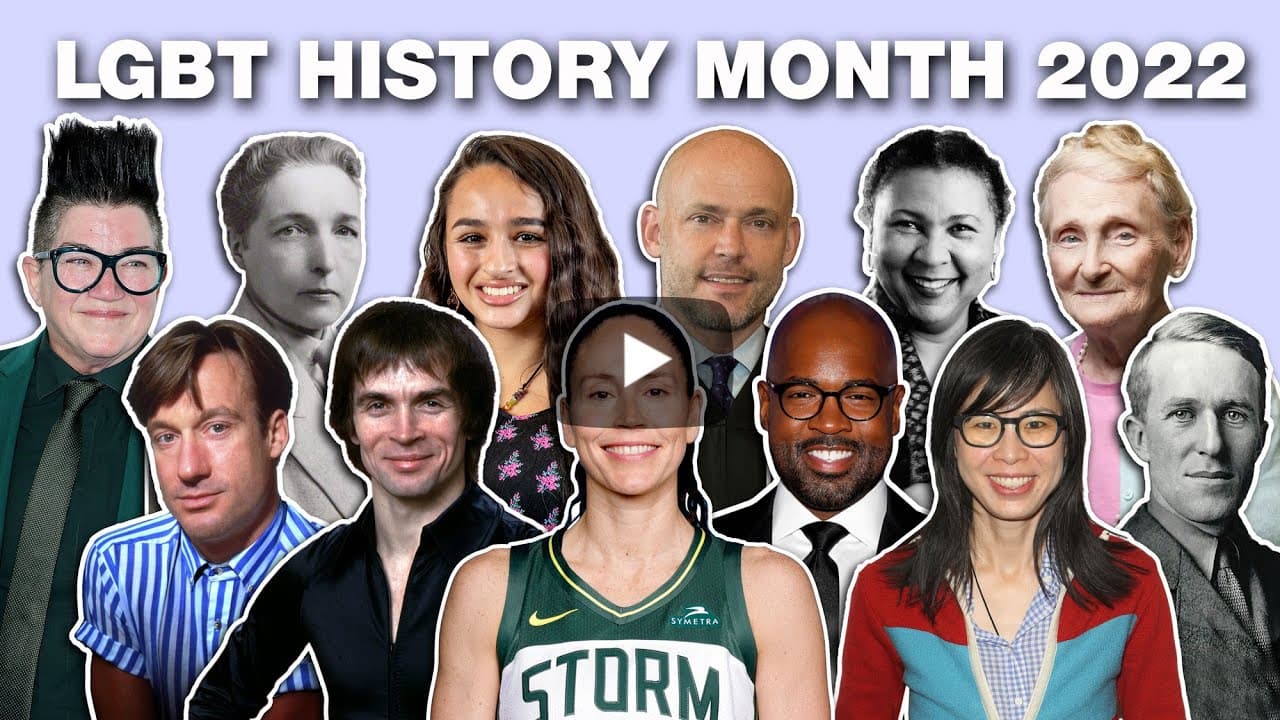
LGBTQ History Month exists because one high school teacher thought his students should learn actual history. Rodney Wilson, then teaching at Mehlville High School outside St. Louis and working on a graduate degree at the University of Missouri-St. Louis, founded the observance in 1994 after coming out to his own class during a lesson on the Holocaust. He picked October on purpose: schools are in session, and the month already held both National Coming Out Day and the anniversary of the first national march on Washington for lesbian and gay rights. GLAAD, HRC, the National Education Association, and the National Gay and Lesbian Task Force endorsed it soon after.
That origin story is worth knowing because almost none of it shows up in the campaigns brands run for this month. What shows up instead is a rainbow-tinted version of the same Pride Month assets, run again in October because someone noticed the calendar had another LGBTQ+ date on it, with none of the actual history behind it.
Why the generic approach fails specifically here
Pride Month is a celebration. History Month is an education project, and that distinction is the whole difference between a campaign that lands and one that reads as a rerun. When a brand repeats its June creative in October with no new substance, it signals that the moment was never about LGBTQ+ history at all. It was about having a reason to post.
This is the same pattern behind the term rainbow washing: LGBTQ+-coded marketing with no connection to real commitment or content behind it. Our guide on marketing versus rainbow washing covers the definition and the broader pattern in depth. History Month is where the gap between decoration and substance is easiest to see, because the entire premise of the month is learning something specific rather than celebrating something felt.
A brand that runs the same rainbow graphic in October that it ran in June isn't celebrating LGBTQ+ history. It's admitting it doesn't know any.
A model that has worked for three decades
Equality Forum, the organization behind the modern History Month observance, runs a campaign called the LGBT History Month Icons series, one new historical figure featured each day throughout October. Each profile is a real person: a specific name, a specific contribution, a specific piece of the historical record, distributed as short-form video and syndicated content rather than a single static graphic. The format has run annually since the mid-2000s, which makes it one of the longest-running LGBTQ+ content franchises in existence, corporate or otherwise.
The reason it holds up is structural. Each day covers exactly one person in enough depth to teach something, the discipline most brand campaigns skip entirely. A version of this model scaled down to a single week, or even a single feature, still outperforms a month of unlabeled rainbow assets, because it requires the same discipline in miniature.
Building a campaign your own audience will believe
Start with a figure or event connected to your own category, not a generic list borrowed from someone else's campaign. A fashion brand can profile a designer who shaped the industry while living openly at real professional cost. A hospitality brand can cover the history of gay bars and bathhouses as literal community infrastructure, decades before the word "safe space" existed. A financial services or business-services brand can tell the story of the National LGBT Chamber of Commerce, founded around a coffee table in 2002 by Justin Nelson and Chance Mitchell specifically because no one was tracking the economic impact of LGBTQ+-owned business at the time. The specificity is the point. Generic representation reads as generic; a story tied to your own industry reads as researched.
Second, decide how public this needs to be before you write a word of copy. Not every company is positioned to run a public campaign, and that's a legitimate call. An internal, employee-resource-group-led series, shared only inside the company, can do real educational work without creating external exposure a brand isn't ready for. A quiet donation to an archive or a historical society that preserves this material is a valid, lower-visibility option too. The visibility decision is itself a strategy call, the same calibration we work through with enterprise clients before anything public-facing goes out.
Third, if you do go public, partner with an archive, historian, or LGBTQ+ history organization rather than writing the copy from a general web search. A quote or fact check from someone who holds the archive changes the credibility of the whole piece, and it usually costs far less than a full production budget.
The safest version of a History Month campaign is also the most convincing one: pick one real story, tell it well, and stop there instead of trying to cover fifty years in a single carousel post.
A second option: telling your own history
Borrowing a historical figure isn't the only path. Companies with a real institutional history around LGBTQ+ inclusion, whether that's an early domestic partner benefits policy, a first openly LGBTQ+ executive, or a founding employee resource group, have a more direct option available: document that history honestly, including the parts that took longer than they should have. NGLCC itself shows how this can work. The organization tells its own history as a growth story, from a 2002 founding around a coffee table to its current role as the voice of 1.4 million LGBTQ+ business owners, with a certification program backed by nearly 450 corporate partners.
The honesty matters more than the polish here. A company that only tells the flattering parts of its own history reads the same as one borrowing someone else's story with none of its own. A brand willing to note when it lagged, and what changed, earns more credibility than a highlight reel ever will.
Before you publish anything for History Month, check
- Does this content teach something specific, or could it run in June with zero edits?
- Is there a real person, event, or organization named, or is the copy entirely generic?
- Has anyone with actual knowledge of this history reviewed the piece for accuracy?
- Have you decided, deliberately, whether this is public-facing or internal-only?
What this looks like in practice
A single well-researched feature beats a month-long generic campaign on every metric that matters: production cost, credibility, and the odds it gets shared by people who know the history being told firsthand. If you're building this into an ongoing content engine rather than a one-off push, the Equality Forum model scales cleanly: one profile a week through October, sourced properly, tied to your category, distributed across whatever organic social channels your audience already uses. That's a fraction of the production lift of a full campaign and a much higher ceiling on how it lands.
Brands in cultural and creative categories have the clearest path here, because the connection between LGBTQ+ history and the work itself is often direct rather than borrowed. A gallery, a venue, a design studio, or any brand in the broader arts and culture space can draw a straight line from a specific historical figure or movement to the work the business does today, the kind of specificity that separates a real campaign from a seasonal placeholder.
Frequently asked questions
Does every brand need to run a public History Month campaign?
No. An internal-only version, shared through employee resource groups or internal newsletters, is a legitimate choice for companies not positioned to go public, and it can do more real educational work than a public post with no depth behind it.
How is this different from what we'd do for Pride Month in June?
Pride Month centers celebration and visibility. History Month centers education: specific people, specific events, specific historical record. Content built for one shouldn't be recycled for the other without real changes.
What if we don't have an obvious connection to LGBTQ+ history in our industry?
Almost every industry does, once you look past the first search result. Fashion, hospitality, finance, media, medicine, and the arts all have documented LGBTQ+ history worth researching. The research itself, done properly, is usually the differentiator.
Is it risky to name a real historical figure in marketing content?
Less risky than most brands assume, provided the facts are accurate and the framing is respectful rather than exploitative. Working with an archive, historian, or LGBTQ+ history organization for a fact check reduces this risk close to zero.
How much does a campaign like this cost to produce?
Far less than a full Pride Month campaign in most cases. A well-researched single feature, done right, can outperform a month of generic assets at a fraction of the production budget, because the cost is in research time rather than creative production.
A History Month campaign that teaches something real is worth more than one that just shows up. Book a call and we'll help you find the specific story worth telling.
Free campaign guide
Would your campaign pass pre-flight?
The same 42 checks we run inside the studio before any campaign aimed at the LGBTQ+ community goes live.
Delivered by email. No spam, ever.
Written by
The marketing and advertising agency for LGBTQ+ businesses and the brands that back them. Strategy, media buying, and brand systems with published results.
See the work