Creator Partnerships
LGBTQ+ Creators Cost Less and Convert Better Right Now
By The Gaygency · 07-24-26 · 8 min read
Ashley and Malori Anthony, a lesbian creator couple, made about $14,000 from Pride-season Instagram sponsorships in 2023. In 2024 that fell to $6,000. In 2025, per Digiday's reporting, it fell again to $1,500, all from a single deal with a mattress company. Trans creator Christopher Rhodes went from 20 brand partnerships in 2023 to 10 in 2024 to one in 2025, and that one had nothing to do with Pride at all. Queer creator Gena Jaffe told Digiday that June, historically her best-earning month, produced exactly one Pride-related deal that year.
None of these are outlier stories. Six LGBTQ+ creators told Digiday the same thing independently in 2025, and the pattern lines up with everything else happening in this market: brands pulling back from visible Pride marketing under political pressure, the same pressure that pushed Fortune 500 participation in HRC's Corporate Equality Index down 65% between 2025 and 2026. What is different about the creator side of that pullback is that it created a straightforward pricing gap, and pricing gaps are where good media buys come from.
What happened to Pride creator budgets
The mechanism is simple. Brands that used to run Pride-specific creator campaigns either cut the budget entirely or redirected it toward general-market content with no Pride framing, out of concern that visible LGBTQ+ partnerships would draw the kind of political attention several major companies faced over the preceding two years. Creators whose audience and content are built around LGBTQ+ identity felt this directly, because their entire specialty became the thing brands were avoiding.
The result, as the numbers above show, is a near-total collapse, not a modest softening, in a specific, previously reliable revenue category, concentrated in exactly the creators whose audiences are hardest to reach any other way now that Meta has removed interest-based LGBTQ+ ad targeting. The audience these creators built did not shrink. The demand for access to that audience, expressed in dollars, did.
Why the pullback is a buying opportunity
Raul Rios, head of strategy at the creative agency Saylor, described the dynamic to Digiday directly: brands that keep showing up create a vacuum around themselves, because so few competitors remain in the space. "What that creates is an opportunity for the brands that remain to really double down and scoop up loyalty and deeper engagement with those audiences, because it creates a vacuum," Rios said. "I think brands that continue to show that emphasis and that commitment to the audience are really set up to win very well."
That is a straightforward read of supply and demand, not sentiment. When most buyers leave a market, the sellers who remain, in this case LGBTQ+ creators with built and trusted audiences, are priced by what demand is left rather than what their audience is worth. A brand buying into that market now is not paying a premium for scarcity. It is often paying less than it would have two years ago for access to an audience that has fewer brands competing to reach it.
The creators did not get worse. The market got smaller. Those are very different problems, and only one of them is a brand's problem to solve.
The audience is still spending
The overall creator economy is not shrinking. Digiday's 2026 outlook projects US creator ad spend rising by roughly 18%, with direct brand-to-creator partnerships alone expected to reach $11.6 billion, up 21% year over year, and spend on ad adjacencies around creator content expected to climb 33% to $7.9 billion. Budgets are moving toward creators in general, at a faster rate than almost any other category in marketing. They are simply moving away from LGBTQ+-specific partnerships at the same time, at a moment when that specific audience is one of the more engaged, loyal communities available to a brand willing to stay. That gap, rising demand for creators overall against collapsing demand for one specific, well-defined creator category, is a market inefficiency sitting in plain sight in the same industry data.
The engagement math also favors the kind of mid-sized, community-trusted creator this market has an oversupply of right now. Industry data on creator performance in 2026 consistently shows mid-tier creators, roughly 100,000 to 500,000 followers, delivering engagement rates in the 4% to 8% range, well above the 1% to 2% typical of the largest accounts. A brand does not need a celebrity-scale queer creator to reach this audience effectively. It needs a handful of creators whose audience trusts them, at a price the current market has depressed for reasons that have nothing to do with the quality of the work.
Paying fairly in a down market
A market with fewer buyers is still a market, and how a brand behaves inside it says something. Industry guidance on what separates good creator partnerships from predatory ones in 2026 keeps landing on the same distinction: transparent numbers for transparent deals, on the way in and the way out. A brand that sees the Anthonys' Pride income fall from $14,000 to $1,500 in two years and treats that as an excuse to negotiate a lower rate is buying short-term savings at the cost of exactly the trust that made the partnership worth pursuing in the first place. A brand that pays a fair, transparent rate, tied to clear deliverables and clear payment terms, is the brand a creator recommends to the next brand, and the one whose partnership performs because the creator is not resentful of the deal.
This is the same math that applies to any market with a temporary supply-demand imbalance, not charity framing: the buyers who act like the imbalance will not last, and build the relationship accordingly, are the ones still getting first access to the best partners when the market normalizes.
How to build this into a media plan
This is not an argument for opportunistic, one-off deals timed to June and dropped in July. That pattern is exactly what created the vacuum in the first place, and creators can tell the difference between a brand testing the water for a month and one building a real partnership. The brands winning trust right now, per Rios's read of the market, are the ones treating this as a sustained relationship: repeat partnerships, year-round content rather than a Pride-only burst, and briefs that let the creator's actual voice come through instead of a script written for them.
Our creator partnerships work is built around exactly that model: vetted shortlists based on real audience fit, contracts with usage rights spelled out before production starts, and performance held to the same standard as any paid channel. Paired with organic social and paid social work that keeps the relationship visible outside of one seasonal push, a handful of the right creator partnerships can do more for a brand's standing with this audience over a year than a single splashy June campaign ever did.
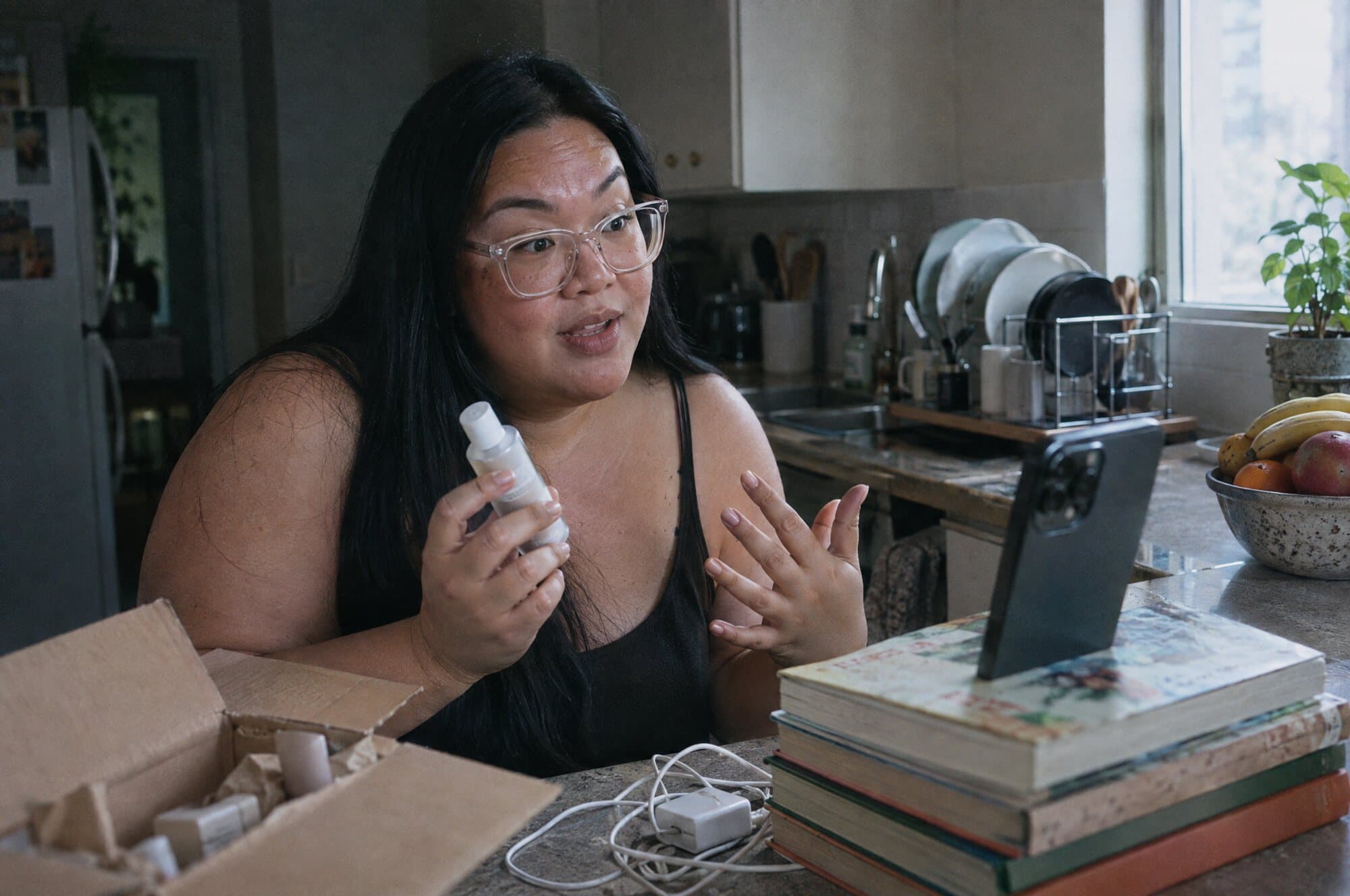
A sustained partnership looks like this: the same two people, working together, past July.
Before signing a creator partnership right now
- Is this a one-off tied to June, or a relationship that continues past July 1?
- Does the creator's actual audience match who the brand is trying to reach, or just the category they are known for?
- Are usage rights and payment terms clear before production, not negotiated after?
- Would this partnership still make sense to run in October?
Frequently asked questions
Are LGBTQ+ creator rates down across the board, or is this a few isolated stories?
Digiday interviewed six creators independently in 2025 who reported the same pattern, and the specific figures for creators like Ashley and Malori Anthony are publicly documented. It is a market-wide shift, not an anecdote.
Does this mean brands should lowball creators just because the market allows it?
No, and doing so undermines the entire point. A creator who senses a brand is exploiting a down market rather than valuing their work will not build the kind of trust that makes the partnership perform. Pay fairly and the loyalty compounds; underpay and it does not.
Is this specific to Pride season, or does it hold up the rest of the year?
The Pride-season collapse is the clearest data point because June used to be these creators' highest-earning month. The underlying opportunity, an underpriced, highly engaged audience with fewer brands competing for it, holds year-round.
How do you find LGBTQ+ creators who fit a brand, rather than just searching a hashtag?
Audience fit, engagement quality, and content history matter more than follower count or category tags. This is the vetting work a creator partnerships engagement does before a single name reaches a client.
Is this approach realistic for a smaller brand, or only for companies with a national media budget?
It scales down well. Founders at an earlier stage are often better positioned to run a handful of genuine creator partnerships than a national campaign, and the current pricing gap makes that math work even better than it did two years ago.
The creators are still there, the audience is still trusting them, and the price to reach both is lower than it has been in years. Book a call and we will build a creator strategy around what is available right now, not what the market looked like in 2023.
Free checklist
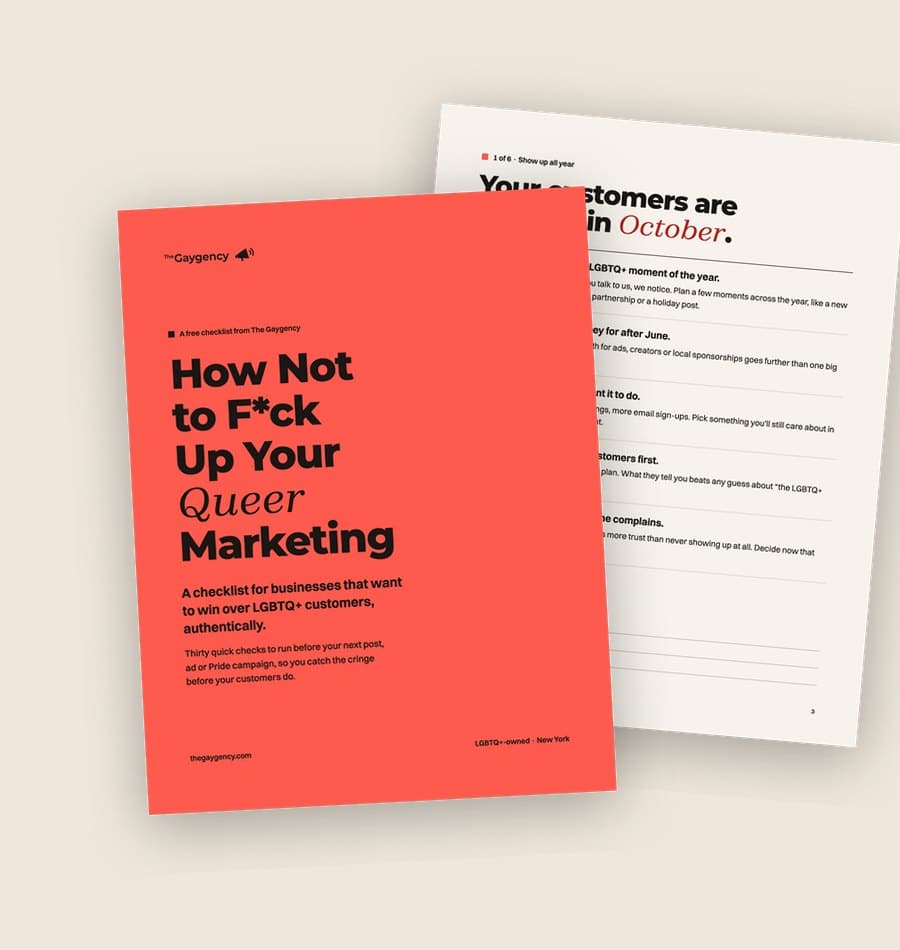
How not to f*ck up your queer marketing
A checklist for businesses that want to win over LGBTQ+ customers, authentically.
Thirty quick checks to run before your next post, ad or Pride campaign, so you catch the cringe before your customers do.
Delivered by email. No spam, ever.
Written by
The marketing and advertising agency for LGBTQ+ businesses and the brands that back them. Strategy, media buying, and brand systems with published results.
See the work